


The Ong Ang Canal is located in the heart of Bangkok’s Chinatown and was an important trade artery in the 18th century. Over time, it became so polluted that it even earned the reputation of being the dirtiest canal in the city.
Last month, Thailand’s oldest cement company Siam Cement Group (SCG) launched the country’s The first 3D printed pedestrian bridge Across its waters.
Surachai Nimlaor, who heads SCG’s cement and green solutions business, said the bridge is part of SCG’s initiative to introduce new construction materials to Southeast Asia. wealth In an interview on January 20.
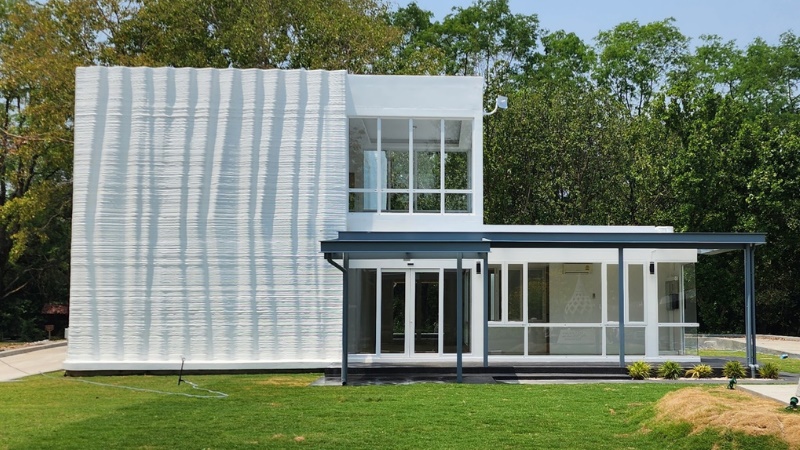
The company first began applying 3D printing technology to construction in the early 2020s, including Building the World in 2023 The first 3D printed medical center In Saraburi, Thailand.
“When we use 3D printing, we can reduce construction time and create uniquely shaped buildings that may not be possible with traditional builders,” Nimlaor said.
The process involves creating a digital model, slicing it for use by a 3D printer, and then having the printer’s robotic arm place concrete layer by layer to form the structure. By eliminating the need for traditional molds or formwork, it enables free-form architecture, including sculptural curves and undulating walls. For example, the fluid façade of SCG’s 3D printed medical center would have been difficult to achieve with traditional cast concrete.
Provided by Siam Cement Group
The technology is particularly valuable for Thailand, where an aging population and a workforce wary of construction work have left the industry with a shrinking pool of available workers. Nimral explained that the industry was forced to turn to foreign workers from neighboring countries such as Cambodia and Myanmar. (According to 2025 data from the Cambodian Ministry of Labor and Vocational Training, there will be More than 1.2 million Cambodian workers work in Thailandmany of whom are employed in the construction industry. )
Nimlaor admits that, though, 3D-printed buildings are typically only one or two stories high because taller buildings introduce “material limitations in terms of structural loads and stability.”
Thailand’s first cement company
SCG was established in 1913 to build Bangkok’s first cement factory on the orders of the then King Rama VI. Over the next century, the company expanded to focus on three core businesses: cement and building materials, chemicals, and packaging.
Today, SCG is Thailand’s largest construction materials company, with 2024 revenue of US$14.5 billion. it Ranked 21st wealthSoutheast Asia’s Top 500 Listranking the region’s largest companies by revenue. SCG has also expanded into other parts of Southeast Asia, including packaging operations in Malaysia and petrochemical plants in Vietnam.
Greening the construction industry
In addition to 3D printing, SCG is also developing low-carbon cement to solve the problem of approximately 10% of the industry’s Accounts for 8% of global carbon emissionsAccording to the World Economic Forum.
SCG is experimenting with using biomass such as wood to produce cement. Nimlaor claims that carbon emissions per ton of production can be reduced by 20%. SCG currently exports low-carbon cement to the United States and Australia, where developers now prefer materials that meet ESG standards.
“ESG has become a powerful driver of global markets,” he explains. “Many companies now have clear carbon reduction targets and sustainability commitments.”
SCG hopes to launch a third-generation low-carbon cement that will reduce carbon emissions during production by up to 40%, but Nimlaor hopes they will eventually be able to reduce carbon emissions by up to 90%.
Going forward, SCG hopes to continue to push the boundaries of creating green building materials. “Sustainability and business growth must go hand in hand,” he concluded.