
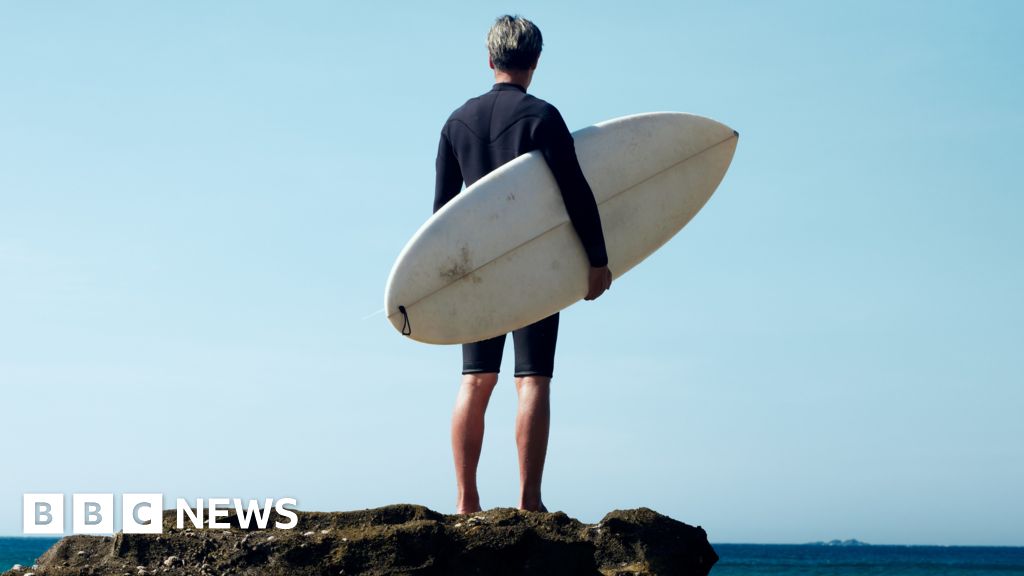

A surfer has been bitten by a shark, the fourth attack off the coast of New South Wales (NSW) in Australia in 48 hours.
The 39-year-old man suffered minor injuries after a shark hit his board near Crescent Head on Tuesday morning. He is currently in hospital in stable condition, reports said.
It follows three other attacks in Sydney in the past two days. All beaches in the northern Sydney area will remain closed until further notice, police said.
The attacks followed days of heavy rain, which NSW Superintendent Joseph McNulty said may have created a “perform storm environment” for shark attacks. The rain flushes nutrients into the water, bringing sharks closer to shore.
Tuesday’s attack happened near the Point Plomer campground, about 450km (279mi) north of Sydney.
Steve Pearce, the chief executive of Surf Life Saving NSW, said the surfer was “very lucky not to have sustained any serious injuries”, the ABC reported.
“We really strongly advocate that nobody swim or surf near river mouths because it’s obviously an area where sharks congregate,” said Pearce. “If it was dirty water I would think twice about going there.”
A young surfer had a similar lucky escape at Dee Why Beach in Sydney on Monday, but a shark attack in nearby Manly hours later left a 27-year-old with “life-changing” injuries. On Sunday, a 12-year-old boy was also critically injured when he was bitten at a popular Sydney Harbor beach.
Authorities believe bull sharks are involved in several new ones attacks.
Bull sharks, found in both freshwater and saltwater, are “one of the few sharks that are potentially dangerous to humans”, the Australian Museum says. They are the third deadliest shark species, according to the International Shark Attack File.
In November, a woman died and a man was seriously injured after being attacked by a bull shark on a remote New South Wales beach.
Although Australia is a global shark attack hotspot, the likelihood of being attacked is low.
Police on Monday advised the public to avoid NSW waterways due to recent weather, which has reduced water quality and visibility.
“I would recommend against swimming in the harbor or our other river systems across NSW at this time,” Superintendent Joseph McNulty told reporters.