
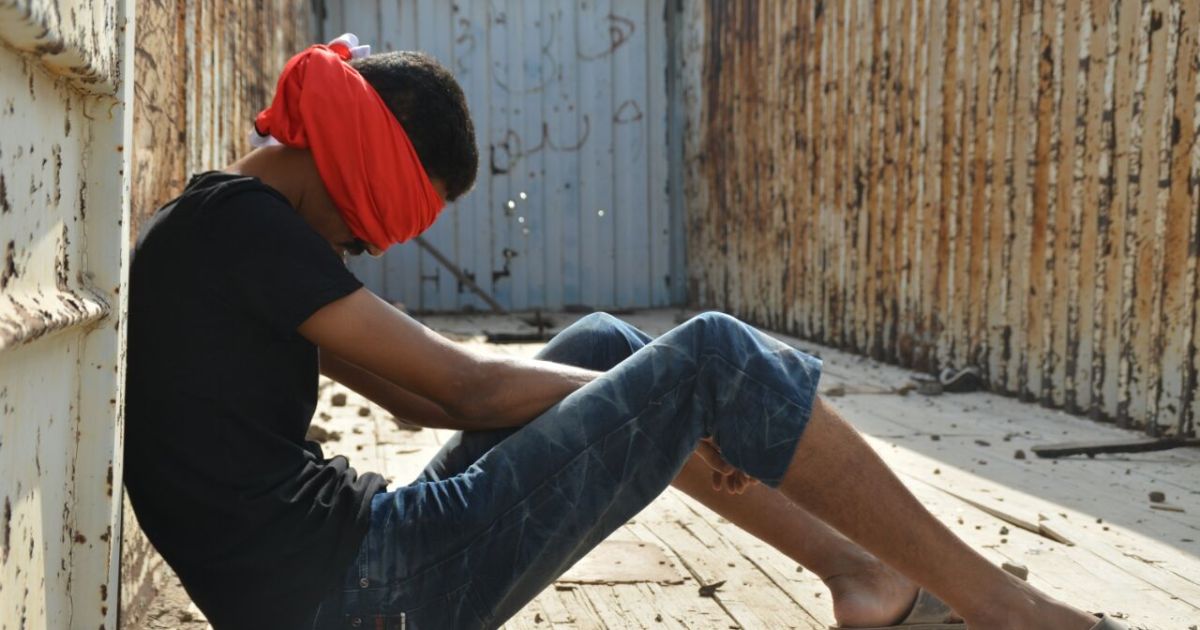

It has been more than six years since Ali Hasan Ali Bakhtian was released from A secret prison in the Hadramout governorate of eastern Yemen, but he cannot forget the terrible suffering he endured during his more than two years of detention.
“It was a very bitter and painful experience,” said the 30-year-old, who was kept inside. secret prison Run by the United Arab Emirates (UAE) and local Yemeni forces called the Hadrami Elite Forces (HEF).
Recommended stories
4 List of itemsEnd of list
“They stripped me and used cold water. Members of the Hadrami elite forces interrogated me first, then they handed me over to the Emirati authorities,” Ali told Al Jazeera by phone, adding that he was detained twice – first in 2016 and then again in 2017.
Ali says the prison was not even suitable for animals. “Closed, dark rooms, hands tied and blindfolded. Twenty days gone by with no chance to clean your body. They used the physical and the body. tortureSolitary confinement many times, beatings many times,” recalls Ali.
The 30-year-old says he was first detained after the bombing in Hadramaut. “I was falsely accused of being a member of the Islah Party,” he said, denying being a member of the main opposition party in Yemen. The country’s Muslim Brotherhood also comes under its umbrella.
“I am not affiliated with any political party. Even the interrogator told me later, ‘I have nothing against you, but the Emiratis wanted you,'” Ali said.
In 2019, he was transferred to the central prison in Hadramaut and appeared before a judge, after which he was released without charge.
UAE Secret Prison
Ali’s case and that of several other prisoners have come back into the news after Hadhramout Governor Salem Al-Khanbashi announced on Monday the “discovery of secret prisons in places where the UAE military is stationed”.
The governor deplored “the presence of non-regular military equipment and materials, explosives, detonators and dangerous elements used by terrorist groups in UAE bases and camps – especially in the vicinity of Rayan International Airport, in addition to the discovery of the military’s secret prisons.”
UAE Army withdrew from Yemen on January 3, after Rashad al-Alimi, chairman of Yemen’s Presidential Leadership Council (PLC), canceled a joint defense agreement with Abu Dhabi and ordered UAE forces to leave within 24 hours.
This comes after UAE-backed Southern Transitional Council (STC) forces took control of Hadhramout and Al-Marah provinces in early December. STC control of Hadramout, which borders Saudi Arabia, was viewed by Riyadh as a threat to national security.
Saudi Arabia-led coalition forces bombed Mukalla, the capital of Hadramaut, and Riyadh said the UAE-linked weapons were destined for the STC. Soon after, government forces backed by a Saudi-led coalition recaptured the two provinces in early January, leading to the collapse of the STC. The UAE has denied supplying arms to separatists in the south.
Al-Jilani, deputy governor of Hadhramout, told Al Jazeera that “four illegal detention sites” linked to the UAE military had been “identified” in the governorate.
“Such practices are a clear violation of the Yemeni constitution, applicable laws and all international and humanitarian charters and agreements that criminalize extrajudicial detention,” he said, adding that local authorities in the governorate would conduct comprehensive and transparent investigations and hear the testimonies of victims and collect responsible evidence.
Meanwhile, the UAE’s Ministry of Defense issued a statement categorically denying the allegations, describing them as “false and misleading accusations and claims that are not based on any evidence or facts”.
“These allegations are an attempt to mislead public opinion and defame the armed forces of the United Arab Emirates,” the statement said.
Shocking scenes
The government’s National Commission to Investigate Alleged Violations of Human Rights (NCIAVHR) has been tasked with investigating cases of torture in prisons. Officials of the organization have visited the jails and are talking to the victims.
“Secret detention centers were located in state institutions and service facilities, such as Al-Rayyan Airport (Mukalla), the Republican Palace, Al-Dhabba Port, and a central prison known as ‘Al-Manora Prison’,” committee member Ishraq Al-Maqtari told Al Jazeera, adding that the Emirati military had converted them into private ones, after some secret center managers added.
“Most of the alters have very small, very cramped rooms unfit for human detention, some are remote from public life in the desert, and some of them are built underground,” she said.
Al-Maqtari further described that the detention centers were “built with punitive features, such as not being able to stand in them for even a short time, let alone attempt to sit or sleep in captivity”.
“Some of the rooms were used as torture presses, where a person is kept for a long time, even if it is unfit to be held for a few hours,” she told Al Jazeera.
Justice and accountability
Since the withdrawal of UAE forces, there have been regular protests in UAE prisons, particularly in the interim capital, Aden, demanding the disclosure of the fate of hundreds of abducted and forcibly disappeared people.
The NCIAVHR said it would go to other governorates where secret detention facilities have been reported, including Socotra Archipelago Governorate, Aden, Lahj, Taiz and Al Hodeidah.
NCIAVHR member Al-Maqtari, who has been meeting with victims and their families, says, “They demand that the bodies and individuals who detained and tortured them be held accountable and that their dignity be restored and that they be compensated for the horrific, inhumane torture and humiliation they suffered.”