
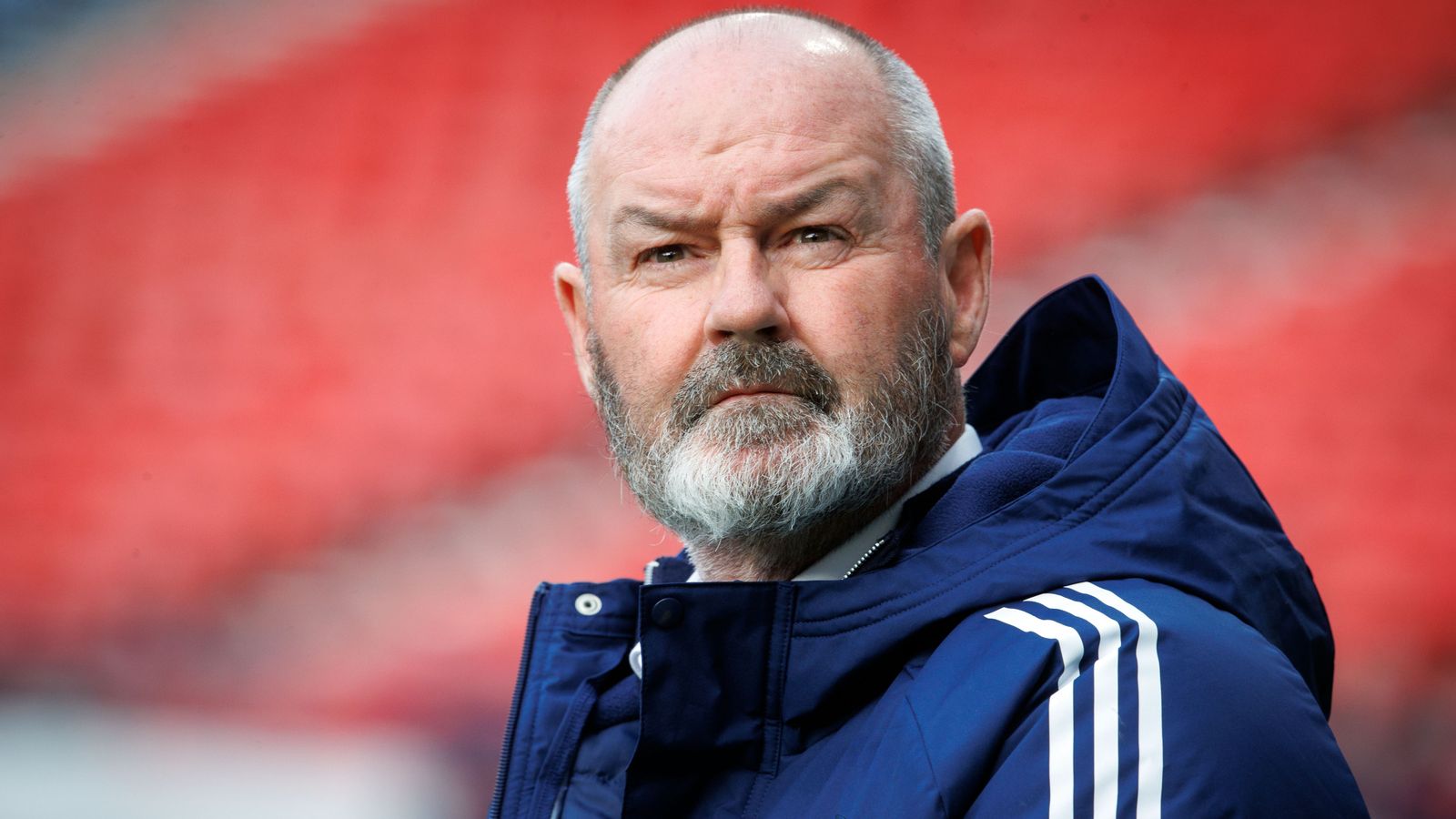

Scotland coach Steve Clarke has recalled four players to his squad for the decisive World Cup qualifiers against Greece and Denmark.
Falkirk goalkeeper Scott Bain – who made the last of his three appearances for the national team in March 2019 against San Marino – is included in place of first-choice Angus Gunn.
Nottingham Forest’s Gunn – who started all four of Scotland’s previous qualifiers – suffered knee ligament damage, Craig Gordon42, and the Rangers’ Liam Kelly other goalkeeping options for Clarke.
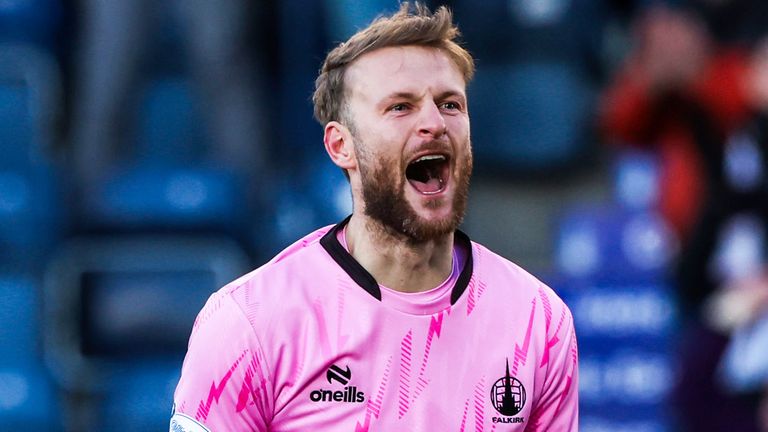
Scott Bain joined Falkirk from Celtic in the summer and has started all 11 league games this season
At the other end of the field, Gordon’s Hearts teammate Lawrence Shankland returns in place of Hibernian striker Kieron Bowie.
Shankland has scored three goals in his last three games to take his tally to seven for the season, helping Hearts to the top of the Scottish Premiership.

Laurence Shankland has scored seven goals in 11 league games this season
Elsewhere, Clarke added to his defensive options by recalling the Sassuolo left-back Josh Doig and Bristol City’s Ross McCrorie in a larger team of 25 players.
With a place in the World Cup play-offs already secured, Clarke’s side travel to Greece on November 15 before welcoming Group C leaders Denmark to Hampden Park three days later in a potential winner-takes-all clash.
Denmark have the better goal difference and face Belarus next, so Scotland will likely need at least a draw in Greece before beating Denmark at the national stadium if they are to secure automatic finals qualification for the first time since 1998.
More to come…
The full Scotland squad:
Goalkeepers: Scott Bain (Falkirk), Craig Gordon (Hearts), Liam Kelly (Rangers).
defenders: Josh Doig (Sassuolo), Grant Hanley (Hibernian), Jack Hendry (Al Etifak), Aaron Hickey (Brentford), Ross McCrory (Bristol City), Scott McKenna (Dinamo Zagreb), Anthony Ralston (Celtic), Andy Robertson (Liverpool), John Souttar (Ranger T), John Souttar (Ranger T).
Midfielders: Ryan Christie (Bournemouth), Lewis Ferguson (Bologna), Ben Gannon Doak (Bournemouth), Billy Gilmore (Napoli), John McGinn (Aston Villa), Kenny McLean (Norwich), Scott McTomeny (Napoli), Lennon Miller (Udinese).
Forwards: Che Adams (Torino), Lyndon Dykes (Birmingham), George Hirst (Ipswich), Lawrence Shankland (Hearts).
From the “head” to the edge of history
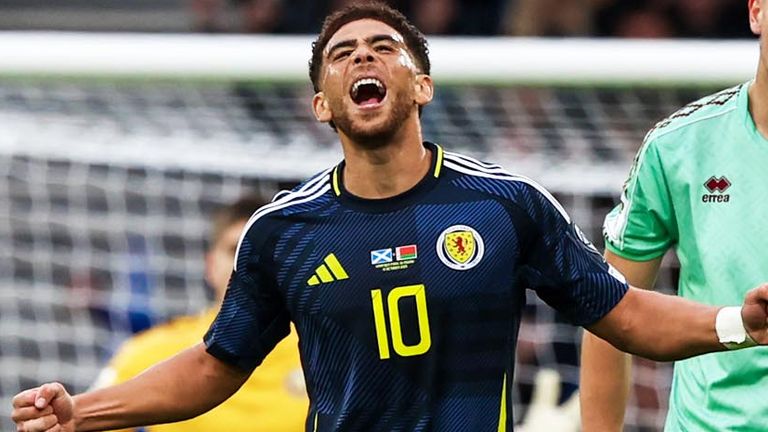
Che Adams scored in the win over Belarus as Scotland secured their place in the play-offs last month
Scotland took four points from their first two qualifiers, drawing away to Denmark, before beating Belarus 2-0 to finish joint top of the table in September.
Next up was a double header at Hampden Park in which all six points were won.
Clarke’s side did it the hard way, coming from behind to beat Greece 3-1, before a 2-1 win over Belarus helped secure a place in the play-offs.
That victory over Belarus saw Clarke take charge for a record 72nd game in charge of the national team, but afterwards he described the performance as “head-scratching”, before adding that he was “probably as disappointed as I was in the whole 72 games”.

Scotland coach Steve Clarke on victory over Belarus as play-off place sealed, plus expects ‘different animal’ as his side take on Greece and Denmark in final World Cup qualifiers
However, Clarke promised a “different animal” for these final two games against already eliminated Greece and group leaders Denmark.
A place in the play-offs is secured, but two more wins will seal a return to the World Cup for the first time since 1998. Scotland and Clarke are on the verge of making history.
Scotland’s final World Cup qualifiers
- Greece (A) – November 15
- Denmark (H) – November 18
European qualification schedule for the 2026 World Cup
- Dates of the final matches of the group stage: 13-18. November 2025
- Playoff game dates: March 26-31, 2026
- Dates of the final tournaments: From June 11 to July 19, 2026
How many European teams will qualify?
A total of 16 UEFA nations will qualify for the 2026 World Cup. The 12 group winners qualify directly for the World Cup; the remaining four spots are determined in a playoff involving the 12 runners-up in the group.
How do the playoffs work?
The 12 group runners-up will participate in the play-offs, along with the four highest-ranked 2024/25 UEFA Nations League group winners who did not finish the group stage of the European qualifiers in first or second place.
The 16 teams that make the playoffs will be drawn into four playoff paths, with four teams in each. The play-off matches will be played in semi-final matches, followed by the final in one international period from 26 to 31 March next year.
When and where is the 2026 World Cup?
The 2026 FIFA Men’s World Cup takes place from 11 June to 19 July 2026.
The tournament will be held in 16 cities in three North American countries: United States, Canada and Mexico. This is the first time that three countries have hosted the World Cup.
The last time North America hosted the tournament was in 1994, when Brazil triumphed after beating Italy on penalties.
The expanded World Cup will have 48 teams – 16 more than in Qatar 2022 – and will be held in three host countries for the first time.
2026 World Cup Schedule
Group stage: June 11-27
Round of 16: June 28 to July 3
Round of 16: July 4-7
Quarterfinals: 9-11 July
Semi-Finals: July 14-15
Play-off for third place (‘Bronze Final’): July 18
Finals: July 19