
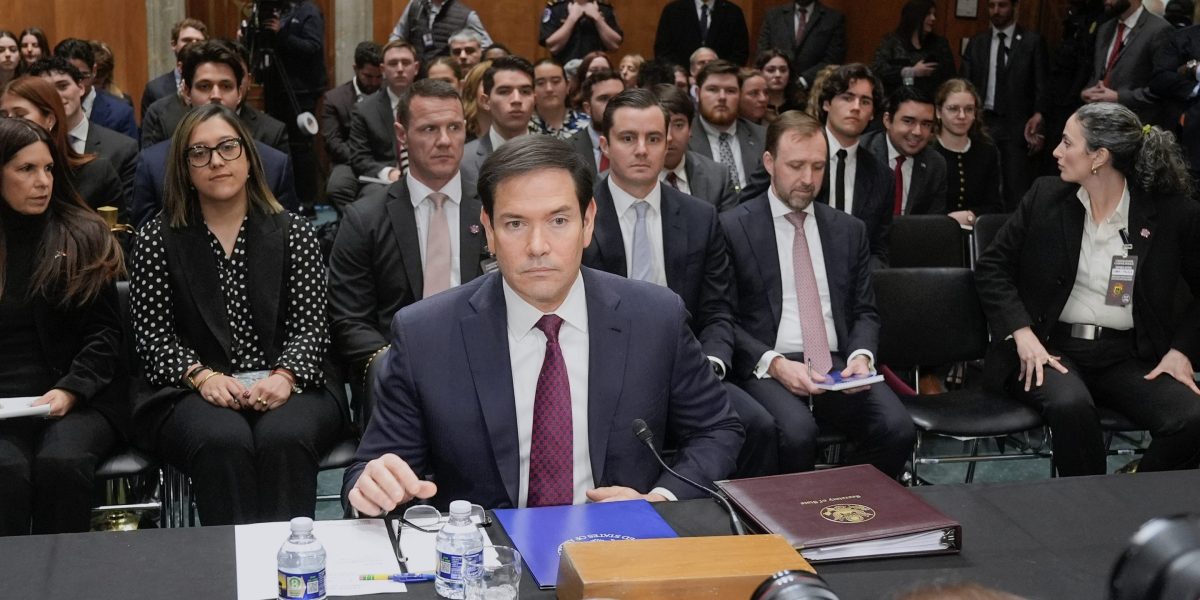

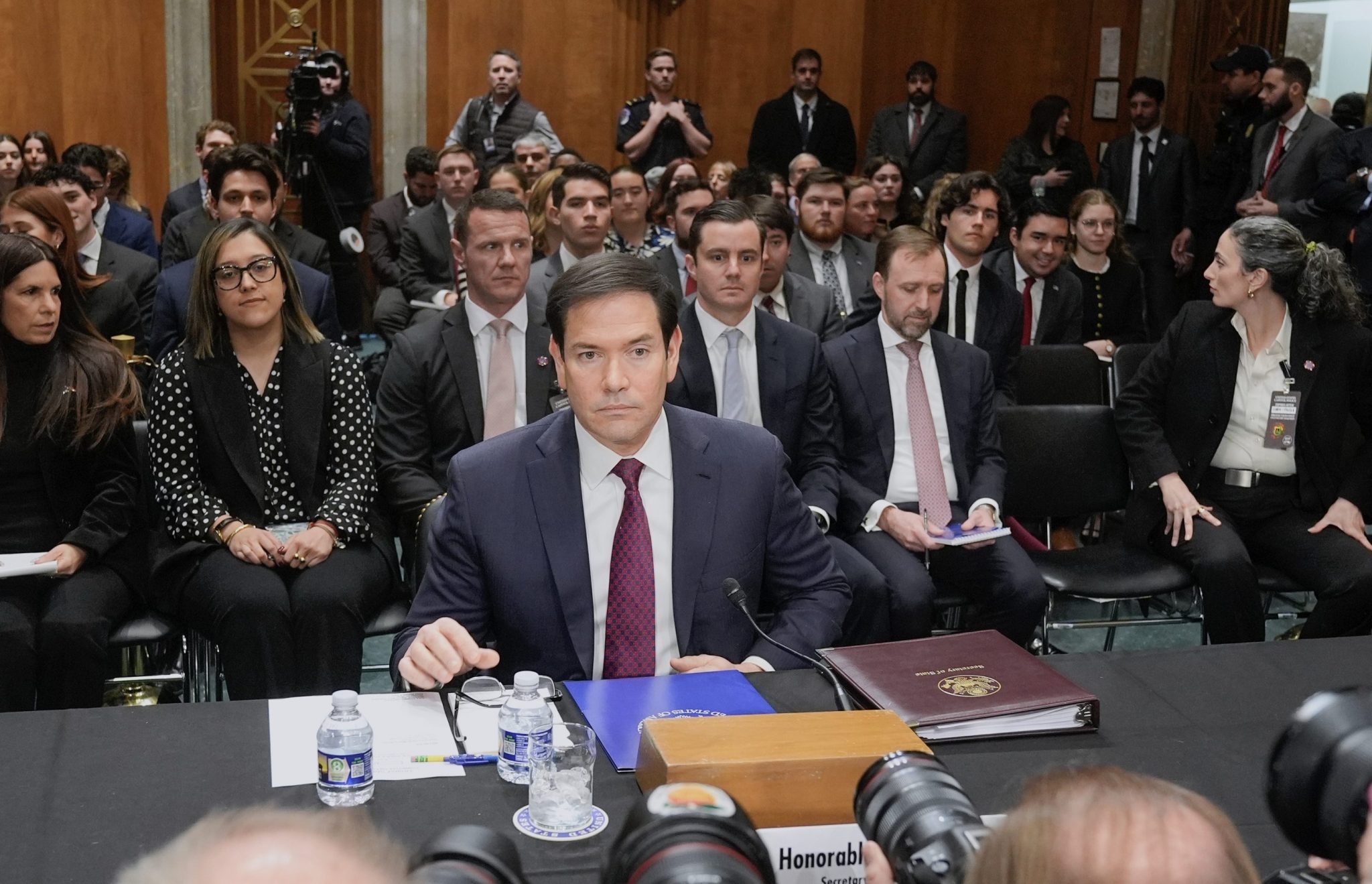
Trump administration will soon allow VenezuelaOil sales now subject to U.S. sanctionsU.S. Secretary of State Marco Rubio said on Wednesday that the revenue would initially be earmarked for essential government services such as policing and health care and would be subject to oversight by Washington.
Rubio told a conference that the United States would retain control in the short term to ensure oil revenues were used to stabilize Venezuela.Senate Foreign Relations Committee Hearing. He noted that the South American country’s interim leaders will submit a monthly “budget” of the funds they need.
“The funds (from the oil sales) will be deposited into accounts that we will oversee,” Rubio said, adding that the U.S. Treasury Department would control the process. Venezuela, he said, “will use this money to benefit the Venezuelan people.”
Rubio offers new insight into how the U.S. plans to deal with the issueSelling tens of millions of barrels of oilVenezuela has the world’s largest proven crude oil reserves and oversees money flows. After the United StatesThe raid that arrested then-President Nicolas MaduroThis month, the United States is trying to use its vast oil resources to influence the South American country’s next move.
Rubio said the United States would not subsidize investment in Venezuela’s oil industry and would only monitor the sale of sanctioned oil as an “interim step.”
“This is just a way to distribute revenue so that we don’t have a systemic collapse as we recover and transform,” Rubio said.
Democrats and some Republicans on the committee pressed Rubio for more detailsTrump’s plans for Venezuelan oil. Sen. Chris Murphy, D-Conn., asked Rubio for assurances that sales of Venezuelan oil will be fair, open and not manipulated for profit.Oil companies aligned with Trump.
“You take their oil at gunpoint, you hold it and sell it … and you’re deciding how and what that money is going to be used for, in a country of 30 million people,” Murphy said. “I think a lot of us believe this is doomed to fail.”
Under Maduro, Rubio said Venezuela’s oil industry benefits the country’s corrupt leaders and the likes of others.China buys Venezuelan oil at discount. Now, Venezuela’s interim leader is assisting the United States in seizing illegal oil shipments, he said.
Rubio said the United States will provide instructions to current Venezuelan leaders on how the funds can and cannot be used, and conduct audits to ensure the funds are used as intended. He said Venezuela could use the money to pay for security or buy medicine.
Rubio said the fund was originally set up in Qatar to avoid the seizure of proceeds by U.S. creditors and other legal issues because the U.S. did not view Maduro’s government as legitimate.
He said hundreds of millions of dollars have been allocated and as much as $3 billion more is expected to be allocated.
“This is an account that belongs to Venezuela, but it has U.S. sanctions as a blocking mechanism,” Rubio said. “We only control the dispersion of funds, not the actual funds.”
Earlier this month, Venezuela’s acting president Delcy Rodriguez said cash from oil sales would flow into two sovereign wealth funds: one to support crisis-stricken health services and another to support public infrastructure including the power grid.
The country’s hospitals are poorly equipped and patients are asked to provide supplies needed for their care, from syringes to surgical screws. They also have to pay for laboratory and imaging tests at private hospitals.
On Tuesday, during a televised event announcing renovations to various medical facilities, Rodriguez said her government and the U.S. government had “established channels of respectful and courteous communication” since Maduro’s arrest.
Neither Rodriguez nor her government press office immediately commented on Rubio’s remarks Wednesday.
At Rodriguez’s request, Venezuelan lawmakers last week began discussing sweeping changes to the country’s energy laws. The proposed reforms aim to create conditions that will attract much-needed private foreign investment.
___
Garcia Cano reported from Caracas, Venezuela.
This story was originally published on wealth network