
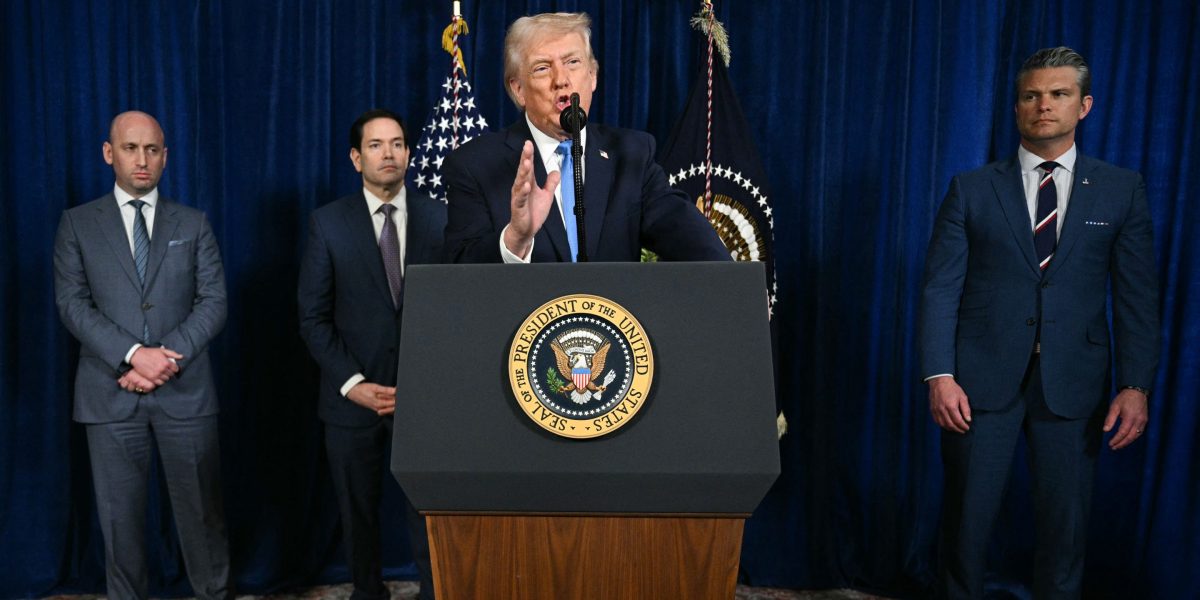


President Donald Trump says major U.S. oil companies “very much want” to enter Venezuela and spend billions of dollarsBut the reality is that U.S. oil producers are hesitant and it will take years and tens of billions of dollars to rebuild Venezuela’s battered oil sector after the United States forcibly ousted and arrested Venezuelan leader Nicolás Maduro in a series of attacks on January 3.
Research firm Rystad Energy said more than doubling Venezuela’s current oil production could take until 2030 and cost about $110 billion, arguing that restoring Venezuela, which has the world’s largest known oil reserves, to its previous highs will take even longer. Due to mismanagement, strikes, sanctions and financial woes, Venezuela’s current oil flow is about 900,000 barrels per day, about one-third of what it was at the turn of the century.
“We’re not waving a magic wand here and all of a sudden more oil starts flowing out of Venezuela,” said Dan Pickering, founder and chief investment officer of Pickering Energy Partners advisory and research firm.
“You’re not going to bully Exxon (Mobil) and Chevron “Trump said, ‘Drill, baby, drill,’ but the industry didn’t listen,” Pickering said. “They’re not going to blindly deploy capital because the U.S. government says they should.”
Oil prices remain low – up less than 2% on January 5 – as the world is awash with oil, making costly and risky new foreign investment harder to justify. “All the excitement and hype surrounding Venezuela’s future does deserve a reality check. Hype and reality are far from each other,” said Matt Reed, vice president at the geopolitical and energy consulting firm Foreign Reports.
“If you’re talking about building Venezuela, you’re talking about bringing in (oil) companies that need real certainty. They need the situation to be stable. They need to have confidence that if they’re going to take the risk and invest, the situation will remain stable. At this point, no one is rushing to step in,” Reed said.
“Who is going to run Venezuela next year or the year after that?” Reid asked. “The Trump administration said, ‘Well, we’ll deal with this later.'” Oil companies, meanwhile, won’t make any promises assuming the best-case scenario will happen. “
As the U.S. focused its campaign in the fall on bombing ships from Venezuela — killing more than 100 people so far — the Trump administration cited narco-terrorism and curbing immigration. When the United States Start seizing oil tankers In December, Trump launched a pseudo-oil blockade and began talking increasingly about oil and Venezuela’s 2007 seizure of oil assets from U.S. companies as justification for the Jan. 3 attacks and arrests. With the exception of Chevron, all U.S. companies have left Venezuela. Chevron has a special license to produce nearly 20% of Venezuela’s oil.
Trump said on January 4: “The oil companies are going to step in and rebuild their systems. They’re going to spend billions of dollars, they’re going to get the oil out of the ground, and we’re going to take back what they stole. Remember, they stole our property. This is the greatest theft in American history.”
Reid said the irony is that Trump is essentially using oil to argue that Venezuela is different from the 2003 invasion of Iraq under George W. Bush, which critics claim has something to do with oil. “When Trump talks about oil, he talks about money. His argument is that any reconstruction will pay for itself…The United States can avoid the endless, messy, costly regime-change wars that have characterized the war on terror.”
“Many Americans are disgusted that the United States could go to war over oil. That’s not a winning argument for politicians,” Reed added.
What happens next?
Wood Mackenzie and other energy research firms believe Venezuela’s oil production could increase from less than 1 million barrels a day to about 1.2 million barrels a day within a year with U.S. cooperation and state oil companies PDVSA and Chevron addressing what it calls “low-hanging fruit.”
Rebuilding much of the production, pipeline and processing infrastructure to get more oil out of the ground and shipping it to countries around the world, primarily China and the United States, is much more complicated than anything else.
Still, Chevron’s stock price rose 5% on January 5, while Exxon Mobil and ConocoPhillips An increase of more than 2%. The two largest oilfield services companies most likely to do business in Venezuela again saw Halliburton’s shares rise nearly 8% and SLB’s shares rise nearly 9%.
Oil companies are reluctant to comment publicly, hoping to avoid upsetting the Trump administration or the Maduro regime currently led by Maduro Vice President Delcy Rodriguez. She has struck a more conciliatory tone toward the United States after her initial defiant remarks that Maduro was illegally kidnapped and must be returned to power.
Exxon, halliburtonSLB declined to comment at this time. ConocoPhillips said it was closely monitoring developments and that it was “premature” to speculate on future investments.
Chevron said it was focused on the safety of its Venezuelan employees and the integrity of its oil assets and declined to make any comment about the future.
At a conference in Washington, D.C., in November, Chevron Chairman and CEO Mike Wirth said the geopolitical environment was difficult, but Venezuela’s potential was worth the effort. “The kind of volatility you see in a place like Venezuela is challenging. But we are in for a long game. Venezuela is geologically rich and has vast resources. We are committed to the people of the country and want to be involved in rebuilding the Venezuelan economy in a timely manner should circumstances change.”
Most of the world’s refineries cannot process the extra-heavy crude oil from Venezuela, but China has many refineries that can and therefore receives about 80% of Venezuela’s oil exports. Energy analysts say taking control of Venezuelan oil could give the United States more leverage in negotiations with China over the country’s dominant rare earths processing industry.
Most of the remaining oil exports go to the U.S. Gulf Coast, where several refineries are hungry for more oil and increasingly dependent on Canadian barrels of heavy oil sands.
And, in the short term, Venezuelan oil production is likely to decline further before rebounding or rebuilding.
“The most important thing for the oil market right now is the (naval) blockade. As long as results are achieved, the blockade will continue,” said Reed, who believes Venezuela’s leadership needs to comply with U.S. demands. “It could take months. Venezuelans won’t be able to export large amounts of oil until Trump is satisfied.”
This story was originally published on wealth network