

Myanmar denies committing genocide against the Rohingya people, saying Gambia has failed to provide sufficient proof, as it begins its defense at the UN’s highest court.
Ko Ko Hlaing, a representative of the Myanmar government, told judges at the International Court of Justice (ICJ) that the allegation was “baseless”.
Earlier this week, Gambia’s foreign minister Dawda Jallow told the court that Myanmar wanted to wipe out the minority Muslim population by using “genocidal policies”.
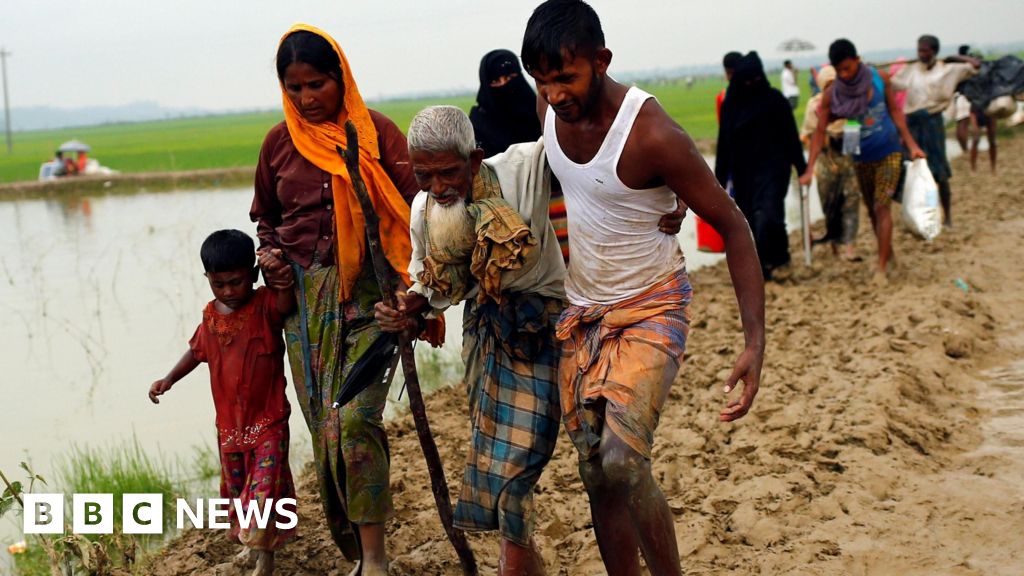
Thousands of Rohingya were killed and more than 700,000 fled to neighboring Bangladesh during a crackdown by the Myanmar army in 2017.
A damning report issued by the UN the following year said that top military figures in Myanmar should be investigated for genocide in Rakhine state and crimes against humanity elsewhere.
Myanmar – which has been under military control ever since overthrow the civilian government in 2021 – rejected the report and always said its operations focused on militant or insurgent threats.
On Friday, Hlaning told the ICJ that “Myanmar is not obliged to remain idle and allow terrorists to have free reign in the northern state of Rakhine”, where the majority of Rohingya live.
“These attacks are the triggers of clearance operations, which is a military term that refers to counter-insurgency or counter-terrorism operations,” Hlaing said.
The Gambia launched its case against Myanmar in 2019, with Jallow telling the ICJ it did so out of a “sense of responsibility” following its own experience with a military government.
Jallow told the court on Monday that the Rohingya had “suffered decades of horrific persecution and years of dehumanizing propaganda”, followed by military destruction and “continuous genocidal policies aimed at eradicating their existence in Myanmar”.
Lawyers for the Muslim-majority country in West Africa also argued that the killing of women, children and the elderly, along with the destruction of their villages, was difficult to justify under the fight against terrorism.
“When the court considers … all the evidence put together, the only reasonable conclusion that can be reached is that a genocidal intention permeated and informed the many actions led by the Myanmar state against the Rohingya,” said Philippe Sands, who argued for Gambia, which has the support of the 57-nation Organization of Islamic Cooperation in its action.
More than a million Rohingya refugees now live across the border in Bangladesh’s Cox’s Bazar region alone – some of the largest and most populous camps in the world, according to the UN refugee agency.
Hlaing – the representative of the Myanmar government – said on Friday that it is committed to “achieving the return to Myanmar of people from Rakhine State who are currently living in camps in Bangladesh”. But he also said external forces, such as Covid-19, have hampered those efforts.
“Myanmar’s commitment and consistent efforts since 2017 contradict Gambia’s narrative that Myanmar’s intention is to destroy or forcibly evict this population,” Hlaing told the court.
He added that “a finding of genocide will put an indelible stain on my country and its people”, so the result is of “fundamental importance for the reputation and future of my country”.
The court also set aside three days to hear witnesses, including Rohingya survivors, but these sessions were closed to the public and media.
The final decision is expected by the end of 2026, the Reuters news agency reports.
It is expected to set a precedent for other genocide cases, including one brought by South Africa against Israel over the Gaza war, as it is the first to be heard in more than a decade – and is seen as an opportunity for ICJ judges to refine the rules around the definition of genocide.
The 1948 UN Genocide Convention, which the Gambia accused Myanmar of violating in its treatment of the Rohingya, was adopted after the mass killing of Jews by Nazi Germany during World War II. It defines genocide as crimes committed “with the intent to destroy, in whole or in part, a national, ethnic, racial or religious group”.