
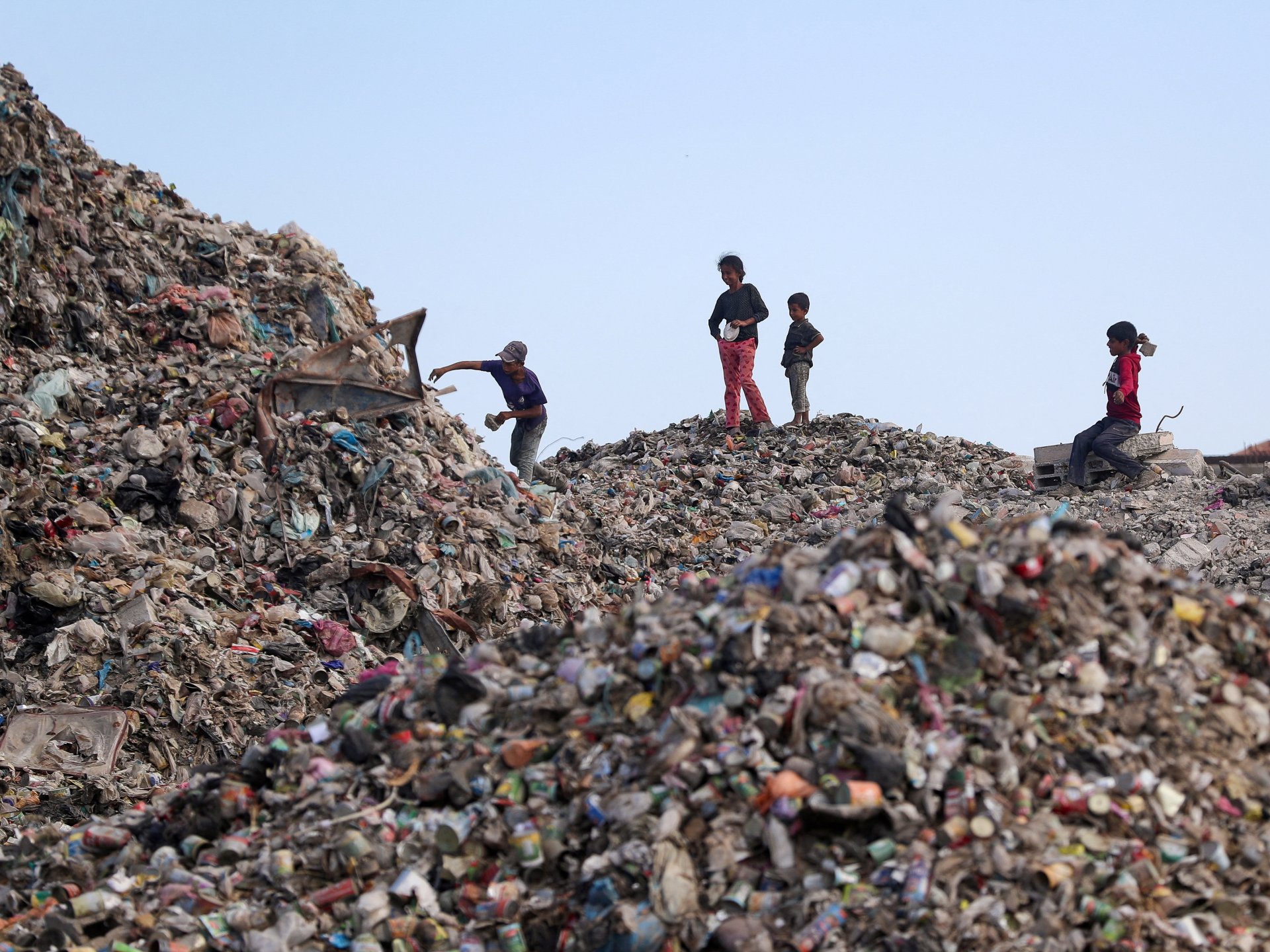

Last month, I witnessed a heartbreaking scene while waiting for a shared taxi at Nuseerat Roundabout. As I stood on the side of the road, I felt a small hand tugging at my clothes.
I looked down and saw a little girl, no older than eight years. She was barefoot, her shirt was torn, and her hair was disheveled and unwashed. Her eyes were beautiful, and her face showed innocence, yet it was clouded with weariness and despair.
She pleaded: “Please, please, give me just one shekel, God bless you.”
I decided to talk to her before paying her. I knelt down and asked, “What is your name, my love?”
She replied in a panicked voice, “My name is Noor and I am from the North.” Her name, which means “light” in Arabic, stands in stark contrast to the darkness that surrounds her.
I asked her, “Noor, why are you asking for money?”
She looked at me hesitantly, then whispered, “I want an apple… I want it.”
In Gaza, an apple now costs $7; Before the war, a kilo of apples cost less than a dollar.
I tried to ignore the pain in my chest. I thought about the situation we face now, where children are forced to beg on the streets just to buy apples.
I paid Nur one shekel ($0.30), but as soon as I did, the situation worsened. A large group of children, all Noor’s age or younger, gathered around me and repeated the same request. I felt great pain.
For more than two years we have faced genocide. We have seen countless tragedies and horrors. But for me, the sight of children begging on the streets is unbearable.
Before the war, Gaza was still a poor place. We used to see child beggars, but they were few and far between, mostly roaming in some areas. Now they are everywhere from north to south.
The genocidal war has destroyed families and livelihoods throughout Gaza. The carnage has left more than 39,000 children orphaned and the massive destruction has left more than 80 percent of workers out of their jobs, driving countless children into extreme poverty and forcing them to beg for survival.
But begging is not the only consequence of poverty; It is a symptom of a deep breakdown affecting the family, education system and society. No parent sends their child to beg because they want to. The war has left many families in Gaza with no options, and in many cases, no living parents to keep children off the streets.
Child beggars don’t just lose childhood; They also face exploitation, hard labour, illiteracy and psychological trauma with lasting effects.
As the number of begging children increases, the hope of this generation diminishes. Houses can be rebuilt, infrastructure can be restored, but the young generation deprived of education and hope for the future cannot be rehabilitated.
The strength Gaza had before the war was not just military power; It was about human power, the main pillar of which was education. We had one of the highest levels of literacy in the world. The enrollment rate for primary education was 95 percent; For higher education, it rose to 44 percent.
Education has stood as a bulwark against the debilitating siege that has engulfed the people of Gaza and crippled the economy. Nurturing the skills and creativity of the younger generations helps them cope with increasingly harsh economic realities. Importantly, education gave children a sense of direction, security and pride.
The systematic attack on Gaza’s education system – the destruction of schools, universities, libraries and the killing of teachers and professors – has exposed a remarkably resilient and effective educational system. The pillar that protects children and guarantees them a bright future is now crumbling.
After I left the Nuseerat Roundabout, Noor’s eyes stayed on me. It was not sad to see an innocent child forced to beg. The encounter has led to the realization that the next generation’s ability to rebuild Gaza is one day being taken away.
The world allowed Israel to commit genocide in Gaza for two years. He knew what was going on, and yet he chose complicity and silence. Today, it cannot erase its guilt, but it can choose to redeem itself. It can take all necessary action to save the children of Gaza and provide them with the rights originally guaranteed by the Convention on the Rights of the Child: food, water, healthcare, a safe environment, education and protection from violence and abuse.
Anything less would mean continued support for the slow genocide of Gaza.
The views expressed in this article are the author’s own and do not reflect the editorial position of Al Jazeera.