
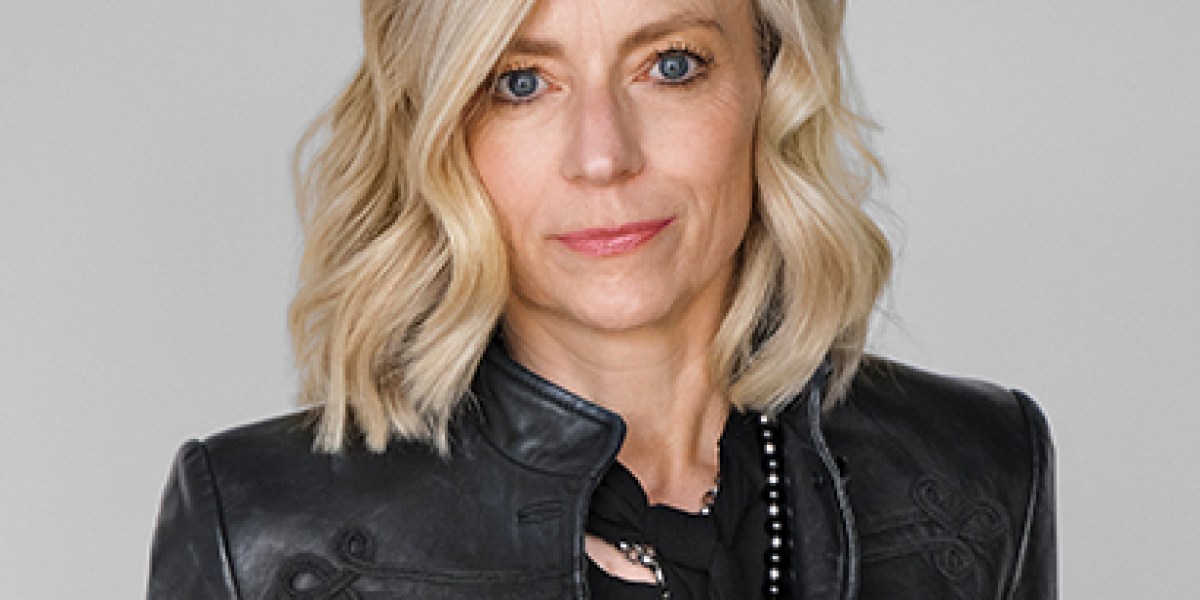

In the high-stakes arena of the global financial services industry, abandoning a 26-year run at a blue-chip company amid the uncertainty of a pandemic-era IPO would strike most executives as foolhardy. For Cathinka Wahlstrom, it’s instinct.
Wahlstrom, now chief commercial officer of the Bank of New York (BNY), has risen from Accenture partner to the C-suite of America’s oldest bank, offering a study in modern leadership that blends vision, systems thinking and a comfort with uncertainty.
Her career was defined by inflection points. She left Accenture at the height of her influence. She crossed continents more than once. When her children were young, she turned down a position in Japan and later agreed to take a private equity-backed company public during a global crisis. Every decision reflects a consistent trade-off between certainty and growth.
Wahlstrom joined Accenture when it was a partnership built on analytics, expertise and client service. As the company grew into a global public company, her role expanded. What started as a deeply technical role in financial services evolved into management and leadership roles in key client relationships, which required her to think across market, cultural and organizational levels. She learned how to operate in complex systems where decisions ripple across clients, teams and organizations.
Over time, her work shifted from solving isolated problems to understanding interdependencies and how choices in one area increasingly influence outcomes in another. She could see her future with unusual clarity, including the shape of her work and its future progress.
“I can see my next decade at Accenture,” Wahlstrom said. “I just know I’m ready for the next thing — even though I don’t quite know what the next thing is yet.”
This clarity marks mastery, she says. Staying meant optimizing what Wahlstrom already knew, while leaving meant accepting the vulnerability of a new learning curve.
During the pandemic, that opportunity presented itself in the form of a role as chief commercial officer of a Blackstone-backed company preparing to go public. The opportunity came during the pandemic, in an environment already filled with uncertainty. Wahlstrom became chief commercial officer of a Blackstone-backed company preparing to go public, closer to day-to-day operations than at any time in her career. The role tested her differently: less consultation and more ownership of the results.
This experience set the stage for what was to come. When the Bank of New York approached her, she faced a completely different challenge. Founded in 1784, the bank’s significant advantage is longevity. Wallstrom’s mission is to modernize without destabilizing. She will be tasked with upgrading technology, growing culture and broadening the bank’s relevance to a younger customer base while preserving the foundation that has enabled the institution to last nearly 240 years.
Today, Wahlstrom says she works in every corner of the organization, where data meets judgment, strategy meets execution, and global plans meet local realities. One example is using artificial intelligence to better understand customer experience, surface friction points and identify emerging opportunities.
Wahlstrom said that, sequentially, her career has moved from stability to uncertainty and then to renewal. This arc, she says, reflects a growing requirement of leadership: the ability to live with paradox. Leaders must possess both vision and detail, combine analytical rigor with emotional intelligence, and think globally while acting locally.
“The journey of setting a vision, developing a plan, and then executing really inspires me,” Wahlstrom said. “I just love the process.”