
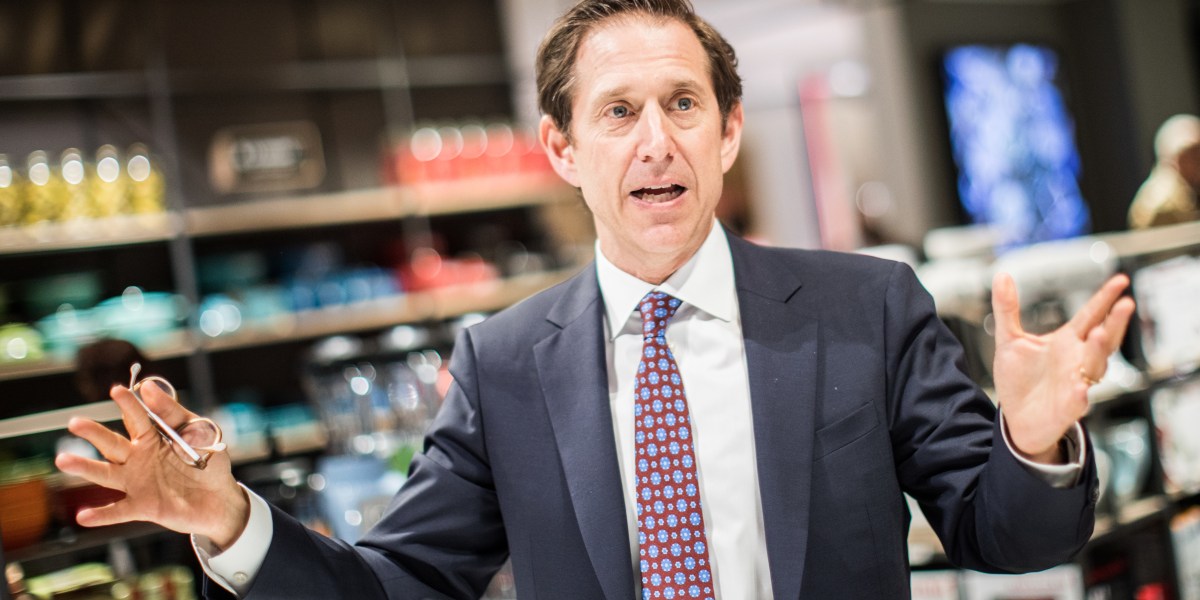

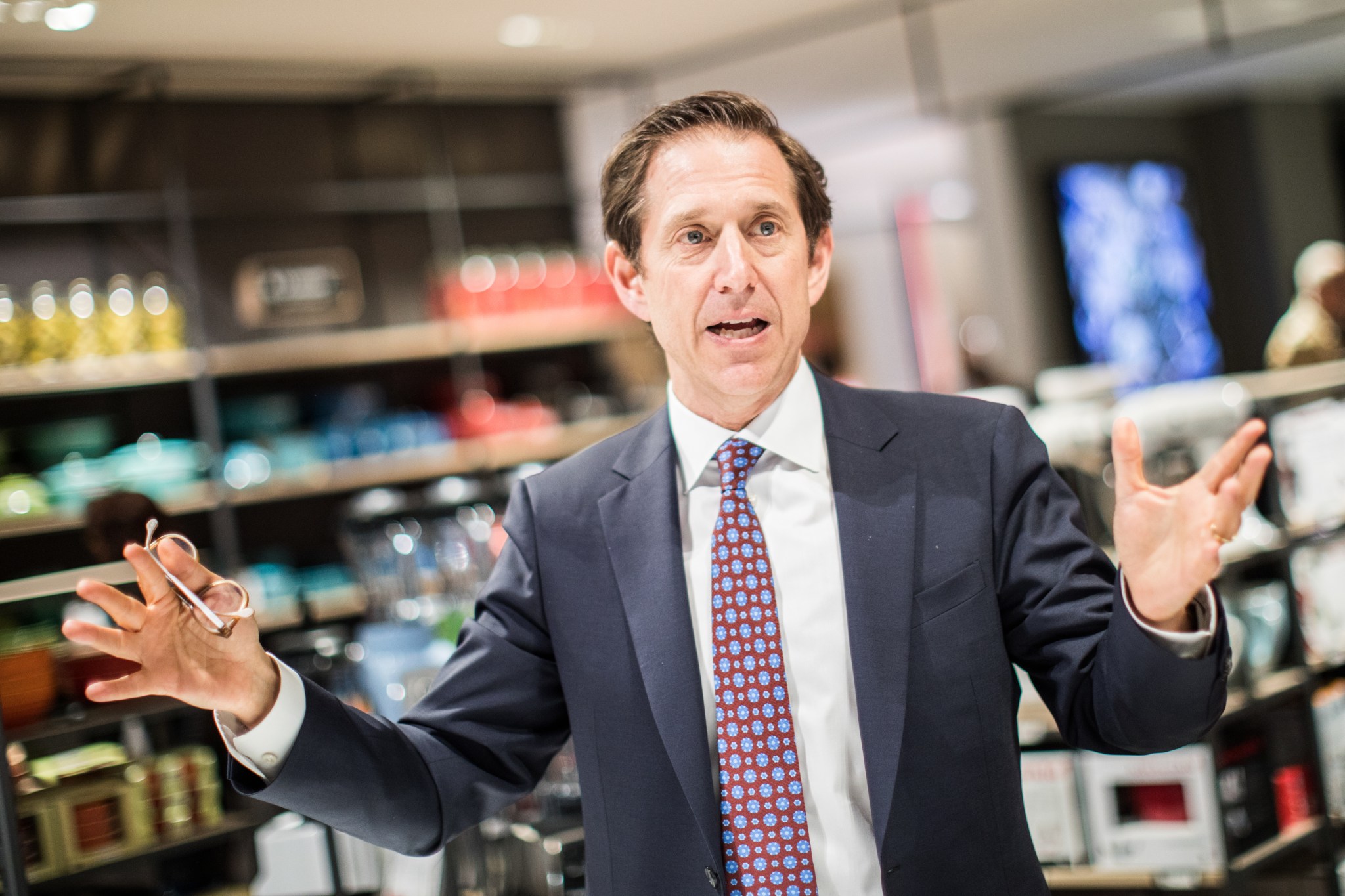
In the retail world, Saks Global executive chairman and newly appointed CEO Richard Baker is known for his anti-Midas approach to dealmaking.
The real estate scion bought the Lord & Taylor department store chain in 2006 and then sold it as a shell of its predecessor in 2019, before the new owners closed its brick-and-mortar stores the following year. The same goes for the Canadian chain Hudson’s Bay, which Baker bought in 2008 but liquidated last year, ending a 355-year run. Baker’s HBC Group, the predecessor to Saks Global, bought online flash sale site Gilt Groupe a decade ago but quickly dumped it, selling it in 2018 at a loss. His troubles also extend to overseas ventures: Baker’s attempt to open a Hudson’s Bay store in the Netherlands in 2017 failed spectacularly, with the Dutch store closing two years later.
In fact, most of the chains Baker has touched over the past two decades have failed — reports over the weekend suggested that Saks Fifth Avenue, Neiman Marcus and Bergdorf Goodman, the luxury department stores he formed in a deal in 2024, may soon find themselves in bankruptcy court. (The company was known as the Hudson’s Bay Company for many years, but changed its name to Saks Worldwide when Baker spun off Saks and acquired its chief rival, Neiman Marcus.)
weekend, Bloomberg reports Saks Global is negotiating a $1 billion lifeline to avoid a Chapter 11 filing after it failed to pay $100 million in interest to holders of bonds due Dec. 30. (Last June, Saks Global restructured its debt to reduce the burden, but its business continued to deteriorate, reporting in October that second-quarter revenue fell 13% year over year to $1.6 billion.) To add insult to injury, former CEO Marc Metrick resigned last week, and Baker took over the role. (Despite his involvement in Saks Global’s woes, Metrick is a respected 30-year veteran of Saks Fifth Avenue and is widely viewed as an executive facing difficulties and implement Baker’s strategy. )
“Mom (and Dad) are not going to let your kids grow up to be real estate developers who think they know the retail business,” Steve Dennis, a former Neiman executive and president of SageBerry Consulting, deadpanned in a recent report criticizing the Saks-Neiman merger. Baker, through Saks’s media relations staff, declined to comment.
To be fair, Baker has had his share of triumphs: He sold the Hudson’s Bay discount chain Zellers to Target For a time in 2011 and 2010s, Saks was handily beating out its competitors. In 2019, Baker also sold German retailer Galeria Kaufhof for a substantial profit.
in a LinkedIn Post In announcing his departure, Metrick wrote: “The past few years have been challenging.… Even in good times, it’s a tough business. “Metric did not respond. wealthRequest for comment.
It is undeniable that most department stores, even luxury department stores, Have struggled for many years. But Saks Global appears to have made a more fundamental strategic mistake: focusing too much on finance and real estate engineering and not enough on luxury retail 101.
one Marriage ill-fated?
The merger of Saks and Neiman in a deal worth $2.65 billion in mid-2024 is the culmination of a plan Baker hatched in 2005 when he formed a private equity firm to acquire retailers with valuable real estate.
The idea behind the Saks-Neiman tie-up is to create a single U.S. luxury goods giant that can exert greater influence over suppliers and save operating costs, with its value underpinned by its valuable flagship stores. (Neiman, which had been under private equity for years and filed for Chapter 11 protection in 2020, was hit by a sales slump due to the coronavirus pandemic. But it did emerge from bankruptcy with far less debt.)
Ultimately, however, many stores competed with each other, and the deal comes as fashion brands shift to selling their goods in their own stores or online rather than in department stores. As often happens when private equity acquires retailers, the companies were saddled with unsustainable debt, which made investing in the core business more difficult and led to miserly measures that were damaging to the business.
One of the most damaging moves in the Saks-Neiman Marcus saga was the company’s decision in 2023 not to pay hundreds of millions of dollars in supplier invoices on normal terms, but instead to extend their terms beyond 12 months to manage a massive backlog of overdue bills. Many suppliers decided to stop or reduce shipments to Saks, resulting in empty shelves—a situation that could hardly be called “luxury retail.”
After all, you can’t sell inventory you don’t have. In October 2025, S&P analysts wrote that Saks Global’s “inventory position was insufficient.” The company lowered its profit guidance for the year, citing “inventory challenges.”
What’s more, in an effort to save cash, Saks made some critical mistakes that diluted the brand and stripped its stores of the sense of fun and wonder that’s so important to a luxury retailer. For example, during the 2024 holiday season, cash-strapped Saks decided not to host its annual light show on Manhattan’s Fifth Avenue to save money, a move that disappointed many New Yorkers. (The show returns in 2025.) In March, Saks Global reversed its decision to close Neiman Marcus’ iconic flagship store in its hometown of downtown Dallas after local outcry.
Meanwhile, two major competitors, Bloomingdale’s (part of Macy’s) and Nordstrom, Already raided Capture market share from Saks Global. Last quarter, comparable sales for the first half of 2025 were up nearly 9% at Bloomingdale’s and 4.1% at Nordstrom. Both companies, both of which have struggled in recent years, are struggling now. Invest in store experience And most importantly, they have the goodwill of their suppliers.
Focus on core strength
Perhaps unsurprisingly, the initiatives taken by Saks Global and its predecessor HBC under Baker have more to do with financial engineering and real estate than with retail fundamentals. Real estate is an industry The Baker family made a fortune: His father, Robert Baker, founded a large shopping mall development company. But many of these moves have proven damaging.
For example, in 2021, HBC spun off Saks’ digital business in hopes of taking it to the stock market and achieving a massive valuation like the e-commerce giant’s. etsi and Chewy This was despite the fact that conventional wisdom in retail at the time was that a chain’s e-commerce and store operations should be fully intertwined for maximum effect. At the same time, the company’s real estate assets – valuable, spacious stores, often located in desirable city centers – are illiquid and require significant investments to attract buyers, making monetizing them difficult.
Now, with Baker himself taking over Saks Global without the operational or sales experience that other retail CEOs have, he will have to quickly address its debt problem. Filing for bankruptcy doesn’t mean Saks Global will go out of business — no one expected that — but it could mean it will have fewer stores and greater distrust of suppliers.
“Excessive debt is a retail killer,” Neil Saunders, managing director at GlobalData, recently wrote in a research note. “This is evident at Saks, including delayed payments to suppliers, a lack of capital to properly invest in the program, and an ongoing struggle to maintain liquidity.”
This is a difficult challenge. Even if Baker can get Saks World back in order, it remains to be seen whether the American luxury shopper will return.