

Thomas Naadi,BBC Africa, Accra and
Jean Hotalor

 Cyber Security Authority
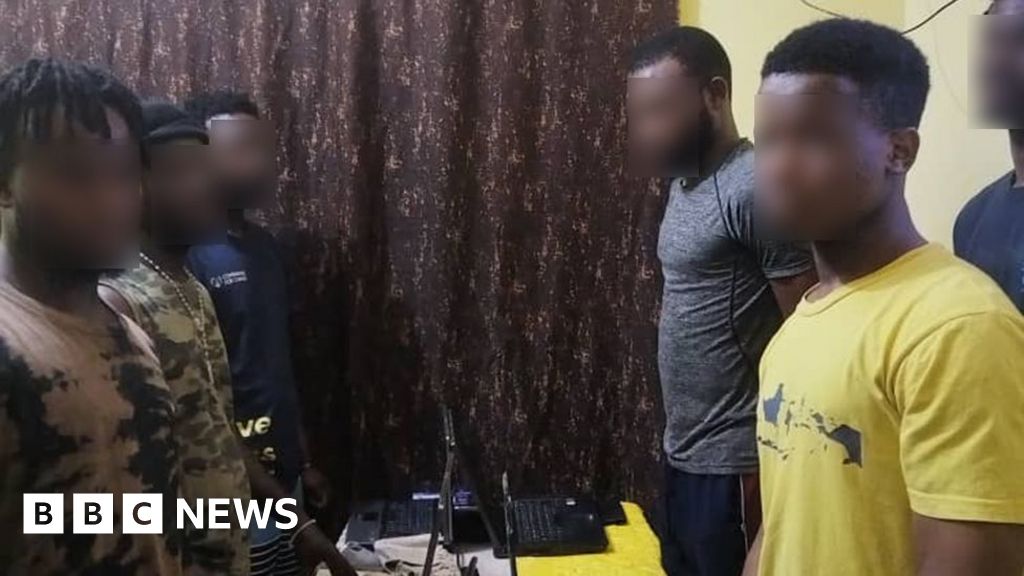
Ghanaian security forces have arrested nine Nigerians suspected of coordinating several cyber-crime activities from makeshift offices in and around the capital, Accra.
Forty-four others, believed to be victims brought to Ghana from Nigeria under false pretenses, were also detained and handed over to immigration authorities.
During the two-day intelligence-led operation, the raids uncovered 62 laptops, 52 mobile phones and two pump-action guns, authorities said.
There is a growing trend of foreigners being lured to Ghana under the pretext of lucrative jobs. They were then placed in gated compounds, their documents confiscated and forced to commit cyber-crime.
They often work on romance scams, where a victim is encouraged to send money to a fictitious partner they believe is real, or business email compromises, where someone poses as an employer and asks people to send funds or sensitive data.
The weekend operation was jointly coordinated by several agencies, including the Cyber Security Authority (CSA).
“All those arrested have been profiled and handed over to the Ghana Immigration Service for safekeeping and further investigation,” Communications Minister Sam George said in a post on X.
“We caution foreign nationals who have been invited to Ghana to prove the claims made by their countrymen to lure them here.”
George also indicated that suspects arrested in previous operations have recently been handed over to Nigerian law enforcement or are facing prosecution.
The CSA and other agencies are working to take down cyber-criminals, including working with US authorities to arrest high-profile suspects.
Among the new operations are the arrest of a popular Ghanaian social media influencer known as Abu Tricawhose real name is Frederick Kumi, who allegedly stole $8m (£5.9m) from vulnerable Americans through a romance scam. He has yet to comment on the allegations.
Another successful operation was the dismantling of a syndicate that defrauded more than 200 victims of $400,000 (£300,000).
 Getty Images/BBC