
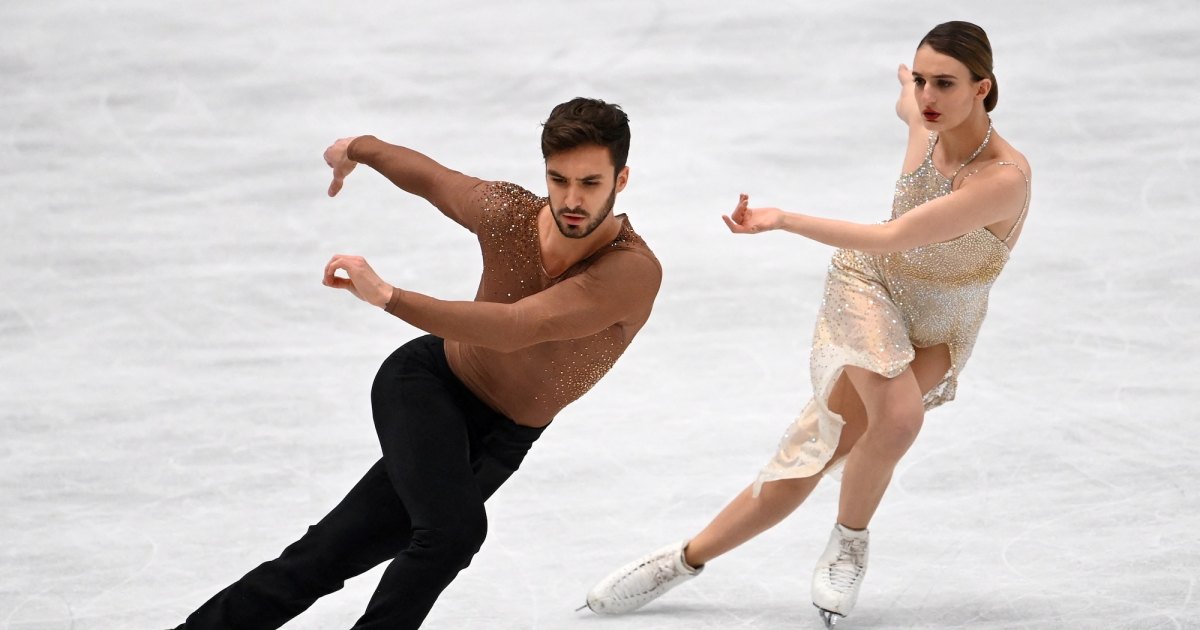

French ice dancer Guillaume Cizeron and his partner, Laurence Fournier Beaudrytook home the gold in their free dance on Wednesday, February 11 at the 2026 Winter Olympics, but Cizeron’s former partner isn’t interested in cheering him on.
“Logout xxx”, Gabriella Papadakis wrote via Instagram Wednesday next to a photo of a pack of cigarettes and a glass of wine.
Papadakis, 30, is now retired, but in her new memoir she recounted her experience working with Cizeron, 31. In it, she accuses the gold medalist of being “controlling, demanding, critical” during their time as partners. Ultimately, she refused to skate with him without a coach present, feeling that he was “beneath her.”
Cizeron responded to the allegations in a statement to French media in January, accusing Papadakis of engaging in a smear campaign against him.

French ice dancers Guillaume Cizeron and Laurence Fournier Beaudry have been considered gold medal contenders even before the 2026 Winter Olympics begin. Olympic medalist Cizeron teamed up with Fournier Beaudry in January 2025, quickly becoming a force in the ice dance discipline. Their association, however, has been controversial. Keep scrolling for a full history: (…)
“In the face of this defamation campaign, I want to express my incomprehension and disagreement with the labels attributed to me,” he said. “The book contains false information, including statements I never made, which I take seriously. For more than 20 years, I have shown deep respect for Gabriella Papadakis, despite the gradual erosion of our bond, our relationship was built on equal collaboration and marked by mutual success and support.”
Papadakis has not backed down. An Olympic gold medalist herself, she previously served as a commentator for NBC, but was ultimately let go before the 2026 games. NBC said The New York Times in January that his book created a “clear conflict of interest” with Cizeron ready to compete.
Papadakis also pointed to the culture surrounding ice dancing in her memoir, explaining that it lends itself to an environment where men have all the power.
“The environment I was working in had become profoundly unhealthy,” he wrote. “I was exhausted, physically and psychologically, and I had to leave to protect myself. I had no choice.”

Olympic figure skater Laurence Fournier Beaudry is speaking out about allegations of sexual assault by her former skating partner and boyfriend Nikolaj Sorensen. In the first episode of the Netflix docuseries Glitter & Gold: Ice Dancing, released on Sunday, February 1, Fournier Beaudry, 33, talks about the impact of the allegations. “I never speak publicly about how (…)
He has been following the Olympics from home. Papadakis posted a video via Instagram on Sunday, February 8, where he encouraged fans to remember “whose voices are excluded from the arena and to critically engage with a show that is built on erasure and abuse.”
“I’m sharing my experiences because I believe in a sport where young athletes don’t have to endure what I did to achieve their dreams,” she wrote in the caption. “However, it is incredibly difficult to make sport safer when the voices of survivors are still being silenced. I had to end my competitive career because I could no longer tolerate the abuse. And now, as a result of speaking out, I have lost my job.”
Papadakis continued: “I do not single myself out as a victim. I use my experience to highlight a reality: As long as survivors are punished for speaking out, sport cannot truly change or become safer. As the Winter Olympics unfold, I encourage you to critically engage with the spectacle. Spectators have power, and how we choose to watch, support, question or look away helps the culture of sport.”