
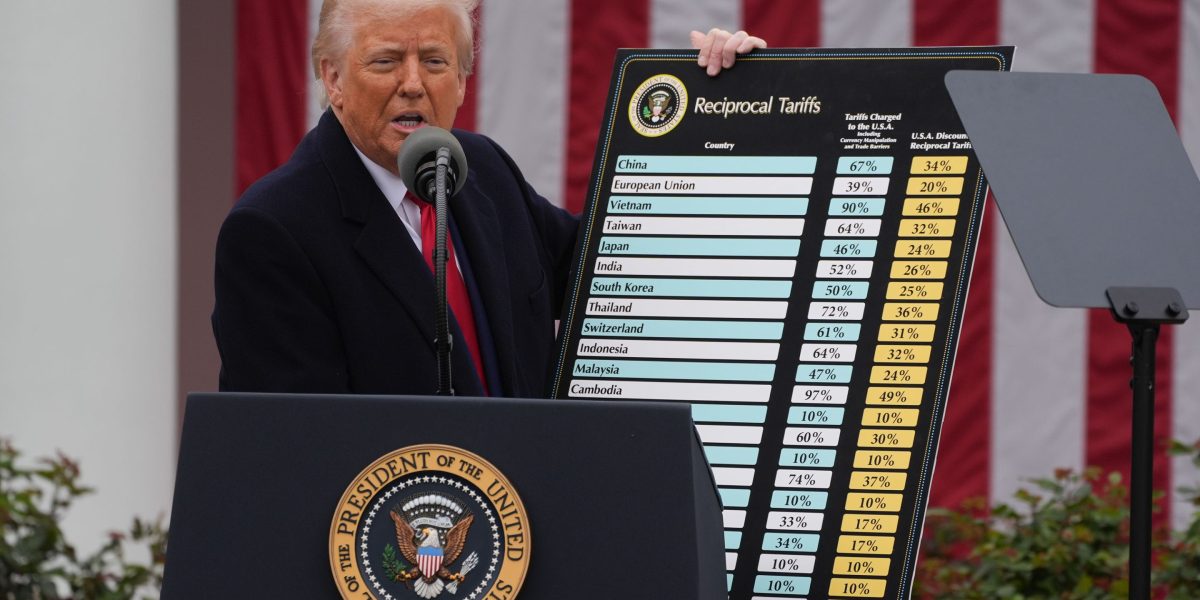


A new study examines 150 years of tariffs in the United States and abroad and finds that they have caused significant disruptions to the economy and financial markets, leading to lower inflation.
The conclusion goes against conventional wisdom about how import taxes affect prices and comes as President Donald Trump’s tariffs have stoked a growing backlash from Americans angry about rising food, utility and insurance costs.
But if the study is correct, Trump may eventually point to better inflation data, assuming he can tolerate economic and labor market weakness.
in a working papers San Francisco Fed researchers Régis Barnichon and Aayush Singh said in a report published Thursday that higher tariffs would lead to reduced economic activity, higher unemployment and lower inflation in the short term.
“The inflation response runs counter to the predictions of the standard model, which suggests that CPI inflation should rise in response to tariff increases,” they wrote. “Instead, the tariff shock appears to act as an aggregate demand shock—moving inflation and unemployment in the same direction.”
Research suggests one possible explanation is that tariffs create uncertainty, dampen consumer and investor confidence, dampen economic activity and put downward pressure on inflation.
In addition, tariffs may trigger a fall in asset prices, thereby affecting demand, leading to higher unemployment and lower inflation.
“We find evidence supporting both channels: stock prices decline and stock market volatility increases in response to higher tariffs,” Banichon and Singer write.
Before World War II, they found that a permanent increase in tariff rates of 4 percentage points reduced inflation by 2 percentage points and increased unemployment by about 1 percentage point.
They added that post-war estimates were more uncertain but still suggested higher tariffs would reduce inflation and worsen unemployment.
Trump tariffs
Administration officials have long insisted that Trump’s tariffs are not sparking inflation, even though consumer prices have climbed since he launched his trade war in April.
But on Friday, Trump announced that he Eliminate tariffs on beef, coffee and a range of other goodsIt comes after voters angered by worsening affordability delivered stunning losses to Republicans in this month’s end-of-year elections.
Meanwhile, Federal Reserve Chairman Jerome Powell and other policymakers believe tariffs could boost inflation once and for all, eventually returning it to a cooling trajectory.
Despite fears of a recession, the economy has remained resilient amid Trump’s tariffs, although the recent government shutdown has put key indicators on hold.
After falling early in the year, gross domestic product has rebounded strongly and consumer spending continues to expand, led largely by the wealthiest Americans.
But employment did slow sharply, with payrolls rising by just 22,000 in September. Trump’s immigration crackdown is also a factor in the low hiring and low labor market.
Still, even if inflation does come back down, that may not be good enough for voters, who are demanding overall affordability improvements and want to see prices fall, not just rise at a slower pace.
“People are angry about the loss of affordability and tend to blame the current government for that,” said Paul Donovan, chief economist at UBS Global Wealth Management. said in a note on Friday. “It’s easy to think of affordability as another version of the ‘cost of living crisis,’ but affordability is slightly different and is likely to persist.”