

South America is at a crossroads. The attack on Caracas, the kidnapping of Nicolás Maduro, and threats by the US president to the Colombian and Mexican presidents are ominous signs of the coming years. Apart from armed external intervention, the elections have raised political tensions from La Paz to Santiago, Buenos Aires to Quito, and the region’s largest democracies face re-election after 2026. Decades of uneven dividends in growth, combined with post-pandemic growth, have exacerbated the erosion of the state’s acute capacity for appeal. The threat is not only domestic: the region’s shift to militaristic politics, and open threats from the US, threats of external influence, banana republics and the modern resurgence of the gunboat diplomacy playbook.
Taken together, these dynamics point to a dangerous convergence. Growing insecurity, hollowed-out political representation and renewed external coercion are reinforcing each other, weakening institutions and once again making the region vulnerable to hegemony rather than self-determination.
Peru is a cautionary tale. For two decades, the country’s economic growth was above average, attracting large amounts of foreign investment and even seeking OECD membership. As of early 2026, the sol is widely regarded as the most stable currency in South America. Yet prosperity did not translate into institutional stability: seven presidents in nine years spoke of deep political dysfunction. Sociologist Julio Kotler has argued that Peru’s elites, enriched by the export of raw materials, had little incentive to share profits or build competent and inclusive institutions. The result is a fragile political economy, where colonial hierarchies linger, inequalities in gender, class and ethnicity persist, and state services are inefficient, weakening legitimacy and representation.
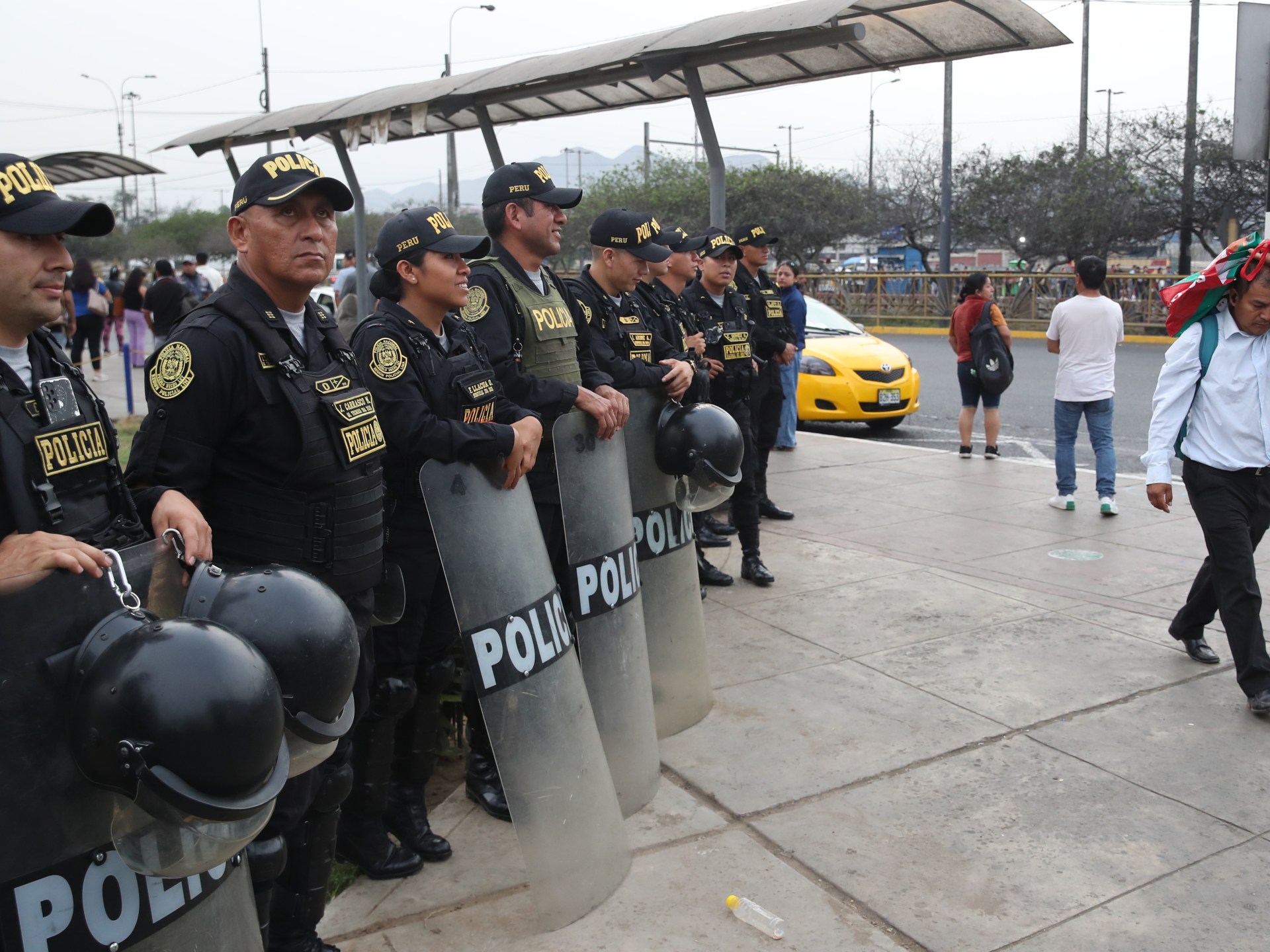
That fragility is now colliding with vulnerability. In Lima, escalating violence and extortionate transport strikes have repeatedly rocked the city; In 2025, dozens of bus drivers were murdered in broad daylight. The protests turned deadly in October 2025 when a rapper and a street artist were shot near the government palace during protests against new President José Jeri. The president of the Congress called the victim a “teruco” (once a label for terrorists), illustrating the toxicity of Peru’s political landscape, as the term is intended to legitimize the protests and demands of dissidents, often indigenous or peasants. This is not an isolated phenomenon, but a symptom of how political systems tend to treat social conflict as a policing problem, something to be suppressed rather than addressed.
Peru’s response is the militarization of public space. Under Jerry, the government declared a state of emergency and sent soldiers to patrol the streets “until insecurity is eliminated.” Ecuador has tried something similar, going so far as to declare an “internal armed conflict”, which has led to increasing human rights abuses. Political representation collapses into patronage or fear when political demands are ignored in favor of a military or police force. Peru’s Congress exemplifies this narrowing of representation. It has become a plutocratic trading house where vested interests are nurtured rather than a forum for the state to undertake the reforms needed to respond to citizen demands.
The 2026 presidential campaign in Peru is amplifying this logic. Frontrunners promise mega-prisons, drone surveillance and transfer of prisoners to Salvadoran prisons. Keiko Fujimori, daughter of former President Alberto Fujimori, openly calls “mano dura” (a military response to the crisis of state and representation). Throughout the Andes, “order” has returned as a magical solution and political proposition, reinforced by US support for repression as a strategic response, although it rarely addresses the causes of violence: social exclusion, impunity, and hollow status.
Chile offers a cautionary example. Pinochet’s jubilation heard after the electoral victory of José Antonio Cast, illustrates a nostalgia for the certainty of dictatorship and dictatorship, sponsored by US intervention. Yet the call for “strong-arm” governance is less about ideology than disillusionment with distant and self-serving parties and governments. When elites ignore the needs of citizens, austerity replaces political representation. Army is politicized and society is militarized. From this shift, it is a small step to a symbiosis in which politicians and uniformed predators protect vested interests, local or foreign, under the banner of security, as authoritarian regimes are strengthened and soldiers receive a “warrior dividend”.
The resurgence of radical populism in the region, as well as overt US military intervention and bombing, resonates with a broader revival of military responses to social and political problems. The revival of the Monroe Doctrine in the Caribbean, the violation of international law and the use of absolute force, the so-called “Dawn Doctrine”, points to a governmental logic that substitutes coercion for political legitimacy. Economic pressure, seen in Argentina’s most recent legislative elections, and the summary execution of alleged drug traffickers follow a similar pattern. These are not separate phenomena but variations of the same response: the gaslighting of social problems by force. Ultimately, this creates fragile states, fragmented societies and political forces that undermine the capacity needed to provide security, fairness and democracy, making external intervention easier, not harder.
As leaders in the region pursue militarization as a means of suppressing dissent, they weaken states and place countries in the same position as the banana republics that emerged. Weak institutions, corrupt legislatures and politicized security forces once again define political life. Today, the script is updated, clearer, rawer and more pragmatic, as the missiles and its consequences after the kidnapping of Nicolas Maduro in Venezuela illustrate.
A different approach is possible, but it starts with accurately describing the problem. Violence is real, yet security without legitimacy is fleeting and power without institution-building is fragile. Andes will not escape the current trend of insecurity and instability by doubling emergency powers, sweeping the streets with massive prisons and soldiers. The only way to reverse this trajectory is to invest in justice and tackle the institutional inequalities that make violence viable and profitable. This cannot happen without restructuring political representation away from the current violent dynamics.
If the region continues to be right-wing in 2026, it will see more states of emergency, more “internal conflicts” and more military campaigns, and foreign actors will inevitably have more room to set terms and priorities in the region. Reboot of Banana Republic with “Security” add-on. It might give US presidents the geopolitical equivalent of the “FIFA Peace Prize,” which is like a reward for achievement, but it ultimately fails in real life. The only way out of this rut is to ensure that politics is conducted uniformly and without the shadow of populism, and that the voice of citizens is not eclipsed by the vested interests of bullies and short-sighted elites. This task will be made more difficult given the US push for trade deals that ignore democracy, human rights or legitimacy.
The views expressed in this article are the author’s own and do not reflect the editorial position of Al Jazeera.