


Listen to this article
Estimated 3 minutes
The audio version of this article was created with AI-based technology. Mispronunciations may occur. We are working with our partners to continuously evaluate and improve the results.
A court on Wednesday ordered the Dutch government to develop a plan to protect residents of the tiny Caribbean island of Bonaire from the worst effects of climate change.
In a surprise rebuke by Dutch authorities, the Hague District Court said the government had discriminated against the island’s 20,000 residents by failing to take “timely and appropriate measures” to protect them from climate change before it was too late.
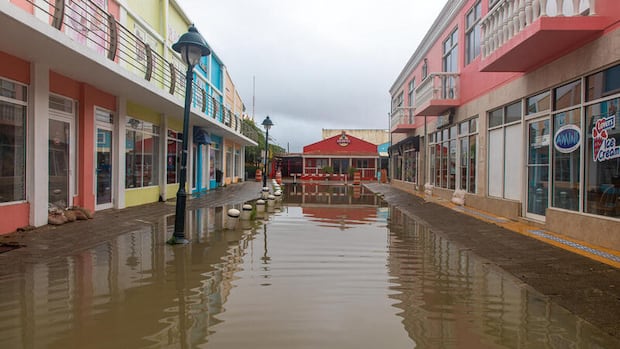
“The island already suffers from flooding due to tropical storms and heavy rains, and according to several researchers, this will get worse in the coming years. Even conservative forecasts predict that parts of the island will be under water in 2050, so in 25 years,” Judge Jerzy Luiten told a crowded court.
The court gave her 18 months to come up with a legally binding plan to reduce greenhouse gas emissions to zero by 2050, in line with international agreements.
The lawsuit, brought by eight Bonaire residents and backed by local Greenpeace, could set a precedent for similar legal challenges elsewhere to force the government to better protect its citizens from the effects of global warming and sea level rise.

“The judges heard us,” said Jackie Bernabella, one of the residents.
“We’re not second-class citizens anymore. Equality. I’m so happy,” she said, wiping away tears in the courtroom.
The 90-page written decision did not elicit any response from the government. The government can appeal the decision.
“The court’s decision is a historic victory if it forces the government to take concrete steps to protect people from extreme weather and other consequences of the climate crisis,” Greenpeace Netherlands director Marike Velekop said in an earlier statement.
The issue came to light in The Hague because Bonaire, along with two other islands, St. Eustatius and Saba, became a special Dutch municipality in 2010. The island’s 20,000 residents are Dutch citizens due to its colonial history.

How the Netherlands argued against the inhabitants of Bonaire.
Government lawyers have argued that the Netherlands is already making strides to combat climate change. State attorney Edward Brans said the case should be handled by national administrations and not by judges.
However, the court said that the government’s efforts were not enough. The proposed goal of reducing emissions by 55 percent by 2030 is not binding and does not fully cover air and sea transport emissions. The court of the Netherlands He said that it is very doubtful to achieve the target set by 2030.