


 Tourism in Eswatini
One of the world’s most popular content creators attracted large crowds, mostly of his young fans, as he conducted a 20-country tour of Africa, a continent he said was “full of surprises”.
Pre-teen boys in Rwanda and Ethiopia wept with joy and excitement as they hugged their online hero in real life – known by his gamer tag IShowSpeed or simply Speed, who now has more than 48 million subscribers on YouTube. He is famous for his high-tempo, frenetic and totally unscripted broadcasts that last anywhere from three to 11 hours.
African Americans were also touched to see the outpouring of love and respect shown to their countryman, who will turn 21 during his “Speed Does Africa” tour.
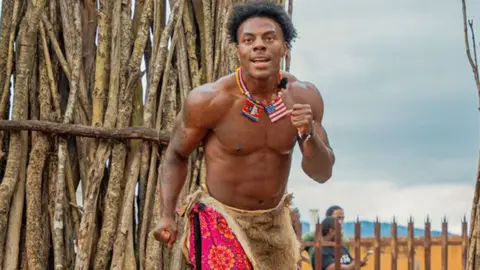
In Eswatini he was given the name “Logijimako” – meaning “the one who runs” – during an initiation ceremony in a royal palace so that he could become a warrior who protects the king and family.
Some on social media named him “Speedani”.
Speed, whose real name is Darren Watkins Jr, himself was momentarily overwhelmed by the reaction of people in Angola – the first country he visited – where a fan recreated on the beach a meme of Speed
“Bro, I’m not going to lie,” he told the chat – the fans who watched and commented on his YouTube livestream.
“I love the love of Africa. The energy here is crazy.”
Over 28 days, he and his team of recording, security and logistics people plan to visit 20 African countries, including Nigeria, Ivory Coast, Liberia and Ghana.
He plans to see the sights, learn some history, explore daily life, culture and food, play sports, do high-risk stunts, meet fans and lookalikes, meet some tourism ministers – and generally experience anyone and anything that comes his way as he fast-walks and livestreams.
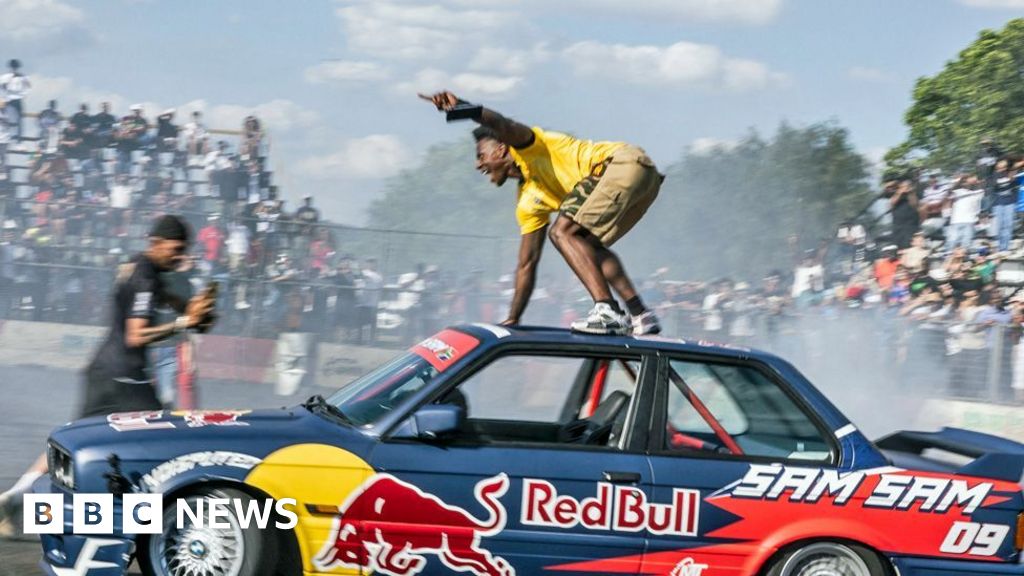
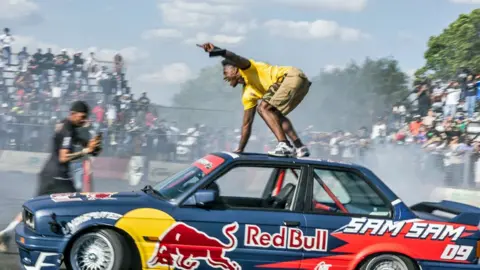
“I want to show the world what Africa really is,” Speed declared during his stop in South Africa – where he went to drive a car, learn some amapiano dance moves and get shaved by a cheetah.
 AFP/Getty Images
Others dismiss the tour as a superficial gimmick – that the streams only benefit themselves.
On the AskAnAfrican Reddit forum, Bakyumu from Niger described the tour as a “sudden sight” of someone who is ultimately an “entertainer”.
Speed started as a gamer, became very famous in 2022, before moving to in-real-life and football content.
His meteoric rise was not without controversy.
He was permanently banned from all Riot Games’ online tournaments after a sexist tirade against a female player. He apologized and admitted that he was wrong.
He was also once banned from YouTube for a week for allowing his game character to engage in inappropriate sexual activity in full view of viewers.
Speed built his brand and online persona on over-the-top, loud and sometimes aggressive reactions.
As well as lunges, back flips and athletic stunts – such as jumping over moving cars – his stock phrases include “What the…” and “Siuuu”, a nod to his footballing hero Cristiano Ronaldo, who he shouts in celebration or excitement.
GenZ-ers and the younger GenAlpha-ers love its raw, uncensored content – where almost anything is possible and sometimes happens live on air.
“I really enjoy the kind of energy he has and the things he does,” Zambian fan Chinyama Yonga told the BBC.
“Even the weird barks that he does,” laughed the 16-year-old, who braved the rain to see Speed in action.
In Zambia, Speed dived into Devil’s Pool at the very edge of Mosi-oa-Tunya, or Victoria Falls, and rapped with Zambian hip-hop pioneer Slapdee.
He also got a haircut at a barber shop in the capital city, Lusaka – to the delight of thousands of people who flocked there as the news spread on social media.
“He’s just himself – and it’s very different from the usual heavily scripted and professionally edited videos,” Chinyama said.
A young relative of mine is a big fan of Speed and wants to tell me why the YouTuber appeals to young people all over the world.
“He’s really funny; he’s very good at doing backflips and he’s really kind. He donates money and he goes out of his way to help people who are in trouble,” said Henry Dale, who is 11 years old, and attends school in the UK.
allow Google YouTube content?
I watched the nearly four-hour livestream of Addis Ababa, Ethiopia’s capital, and was mostly intrigued by the sometimes chaotic encounters and activities.
Speed, wearing shorts and his trademark number seven football shirt – this time in Ethiopian yellow – runs around town.
He went to the Merkato, the main market of the city, to bargain for a traditional “shamma” or shawl, to the Ethiopian Science Museum, where he crashed a simulator plane, to the Adwa Victory Memorial, where he walked barefoot to honor the Ethiopian warriors who defeated the Italian forces in 1896.
To learn that the country uses its own Ge’ez calendarhe exclaimed: “Wait! It’s… 2018. I’m only 13? Ronaldo is still at Real Madrid?”
Enthusiasm is also danced with traditional dancers, known for their energetic, fast “skista” or dancing shoulders.
It was a rare moment for 33-year-old hotel manager Yonaiel Tadiwos.
“His energy to engage all the dancers was amazing,” Yonaiel told the BBC. He also praised Speed for “being brave enough to try a lot of raw meat” – a local delicacy with deep historical roots.
 Getty Images
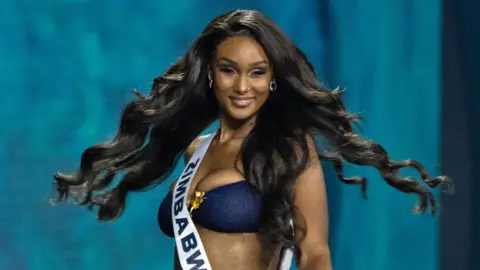
Speed epic walkabouts are not without accidents, just like the capital of Zimbabwe, Harare.
When Miss Universe Zimbabwe came out to greet her, the beauty queen was accidentally overlooked in the chaos of the weather.
Some fans who rushed to hug and take selfies with Speed were quickly thrown to the ground by his security team.
And Speed cut short a rare solemn moment in Addis Ababa when he visited the tomb of Emperor Haile Selassie – because of slow internet connection.
Yonaiel, one of the local Ethiopian organizers, is happy that Speed included his country “because many creators did not give us a chance because of the misconception about Ethiopia”.
But Reddit’s Bakyumu is more critical.
“Watching the local crowd idolize him feels heartbreaking because it highlights a desperate need for escape.
“This is not meaningful cultural exchange. This is a momentary distraction from systemic misery,” said Bakyumu, referring to things like poor housing and unemployment that millions of Africans face every day.
But for Yonaiel, the visit had the effect he hoped for.
“People from all over the world are talking about our country with positive things to say.”
“We know we can rewrite the narrative even one day streaming.”
Can a single streamer’s visit – no matter how big – change enough perceptions to really shift global narratives towards the African continent?
It’s a start, says Samba Yonga, the mother of Zambian teenager Chinyama.
“Speed activates an internal compass of many young people – throughout the diaspora and on the continent – who are quietly searching for belonging, pride and collective identity.”
 Getty Images/BBC