
Transcendental moments in geopolitics that move around the world are no longer just made on the street or in an inner room of circumstances. They are increasingly engineered into the digital realm, where actors, often with self-serving agendas, compete to control the narrative, define its meaning, and decide who speaks for whom.
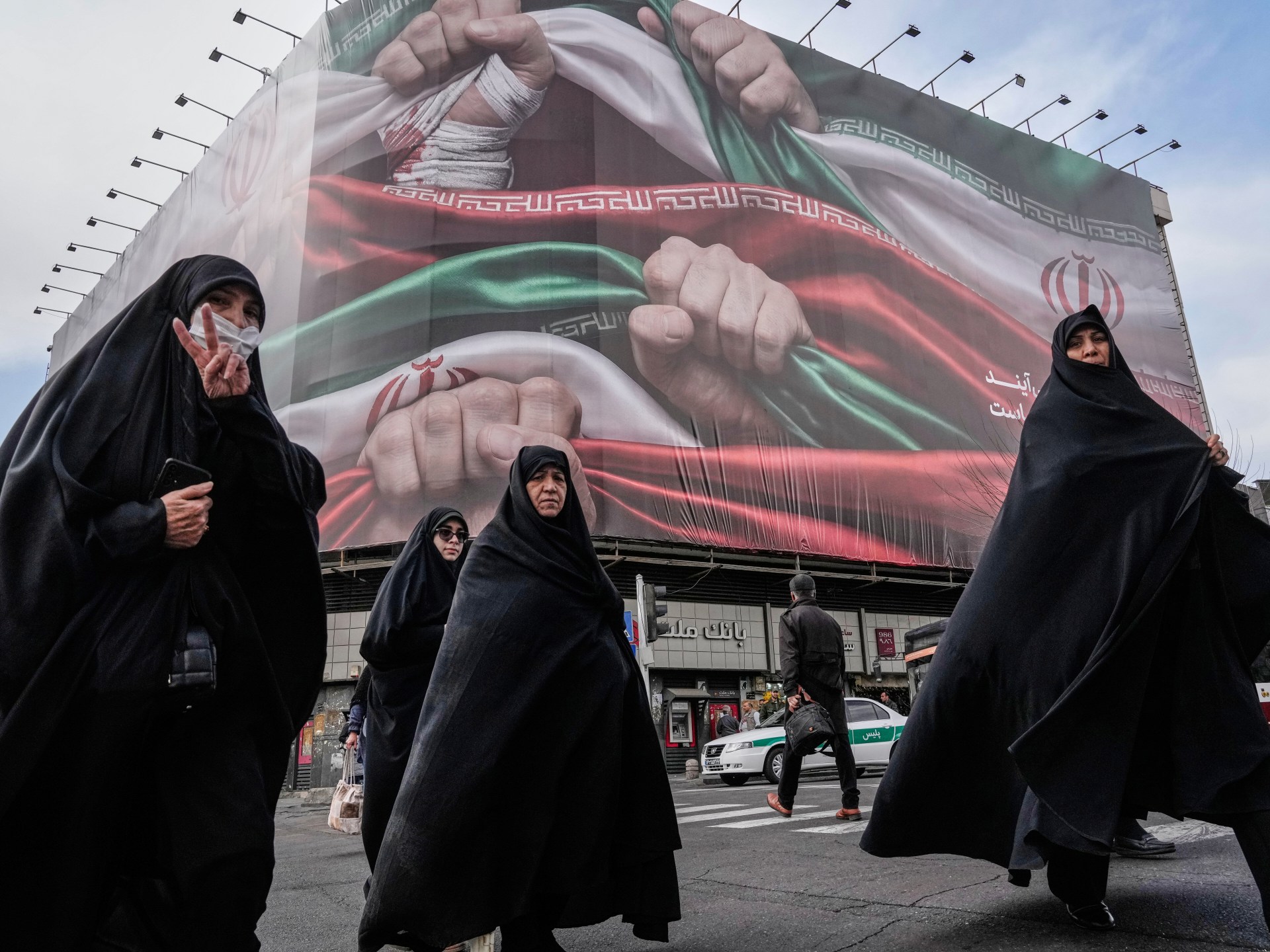
As protests continued in Iranian cities in recent weeks, the hashtag #FreeThePersianPeople trended on X. The campaign was accompanied by a flood of posts announcing an imminent “decisive moment” in Iran’s history and presenting itself as the authentic voice of the Iranian people.
Recommended stories
4 List of itemsEnd of list
However, extensive data analysis by Al Jazeera reveals a different picture.

Tracing the sources of this interaction and its channels of diffusion reveals that the digital campaign did not emerge organically from Iran.
Instead, it was led by external networks—mainly accounts linked to Israel or pro-Israel circles—that played a central role in building momentum and driving discourse toward specific geopolitical goals.
‘Abnormal’ patterns of circulation
Data related to the campaign reveals a striking discrepancy in how the hashtag spread, indicative of artificial amplification.
An Al Jazeera analysis found that 94 percent of the 4,370 posts analyzed were retweeted, compared to a negligible percentage of original content.
More significantly, the number of accounts creating original content did not exceed 170 users, yet the campaign reached more than 18 million users.
This large gap between a limited number of sources and vast reach is characteristic of coordinated influence operations, often referred to as “astroturfing”, in which pre-packaged messages are amplified to create the illusion of broad public consensus.
One story, many forms
A review of the content shows that hashtags were not just expressions of social or economic grievances. Instead, it contained a rigid political framework designed to restructure and actually pour on the unrest.
The discourse depicted events in Iran as a “moment of contraction” and relied on sharp binaries: “people vs. regime”, “freedom vs. political Islam” and “Iran vs. Islamic Republic”.
The campaign heavily promoted Reza Pahlavi, son of the last Shah of Iran, as the only political option. Pahlavi himself was involved in the campaign, a move that was quickly magnified by Israeli accounts describing him as “the face of an alternative Iran”. But he is not thought of by the majority of Iranians, many of whom have fond memories of his father’s atrocities and how the CIA restored him to power in a United States-United Kingdom-orchestrated coup in 1953.
Translation: I share my first call with you today and invite you to start chanting this Thursday and Friday, the 18th and 19th simultaneously at 8 PM, whether you are all on the streets or even from your homes. Based on the feedback from this activity, I will announce further calls to you.
Direct Israeli involvement
This campaign was not limited to anonymous activists. It also involved the direct involvement of current and former Israeli officials at the height of the campaign.
Israel’s National Security Minister Itamar Ben-Gavir posted a tweet in Persian aimed at Iranians, calling for the “fall of the dictator” and expressing support for the protests.
Translation: The people of Iran deserve a free life free from the murderous dictator Khamenei. We stand by you!
Similarly, a tweet by former Israeli Prime Minister Naftali Bennett was widely circulated in a network of hashtags, which were repeated to fit the “liberation” narrative.
Turning protest into an ideological war
One of the most prominent features of this campaign was the attempt to frame the protest as a struggle against religion rather than a protest against economic mismanagement and political oppression.
Posts describing the Iranian government as an “oppressive Islamist regime” circulated alongside stories portraying “Persians” as victims of Islam. This attempt to distinguish between “Persians” and “Muslims” was intended to isolate the regime from Iranian society and frame the unrest as a civilizational struggle.
Israeli activists including Eyal Yacobi and Hillel Neuer also pushed material accusing Iranian authorities of excessive violence while attacking what they called “the silence of the international media”.
Calls for foreign intervention
This discourse quickly evolved from solidarity to a clear call for foreign military intervention. And this narrative was pushed by US President Donald Trump, who bombed Iran’s nuclear sites as part of Israel. 12 day war against Iran in June.
The network amplified statements attributed to Trump about Washington’s readiness to intervene. Pahlavi publicly welcomed these statements and framed them as support for “change”.
Meanwhile, members of the US Congress, including Rep. Pat Fallon, Trump’s Republican Party, further fueled the sentiment, while dozens of accounts in the network tweeted at Israeli Prime Minister Benjamin Netanyahu, urging direct Israeli intervention.

‘Puppet Masters’ Behind Network
Al Jazeera’s network analysis identified certain “central nodes” or accounts that played a key role in growing the hashtag.
- “Rhythm of X”: This account emerged as a central hub for interaction. Created in 2024, it has changed its handle five times. Its content focuses almost exclusively on supporting Israel, promoting the Iranian monarchy, and calling for US action against Iran’s Islamic Revolutionary Guard Corps.

- “Mount Neoh”: This verified account created in 2017 (which has also changed its name five times) identifies its user as a “Jewish Iranian activist”. It presents her as a leading voice in the movement and says she is wanted by the Iranian authorities.

- “Israel War Room”: The analysis shows a strong overlap between the “Nioh Berg” network and the “Israel War Room” account, which regularly broadcasts security and political content aligned with Israeli state narratives.

Creating a crisis
The investigation concluded that the #FreeThePersianPeople campaign was not a spontaneous digital expression of internal Iranian anger.
Rather, it appears to be a political information operation created outside of Iran and led by a network linked to Israel and its allies. The campaign successfully hijacked legitimate economic grievances, reframing them into a broader political project linking the “liberation of Iran” to imperialism and foreign military intervention.