


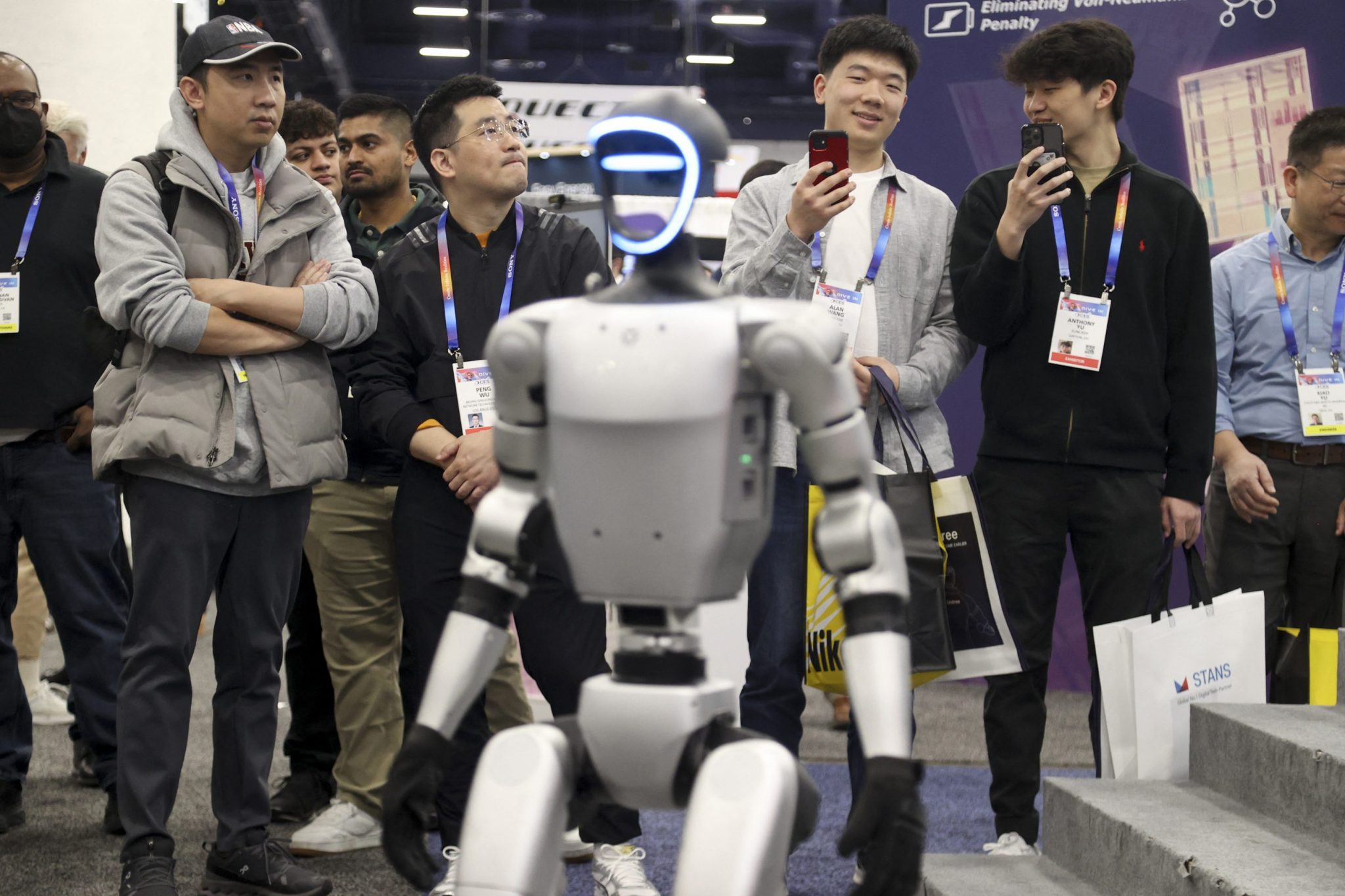
As CES 2026 approaches, some predict The first affordable home robots will kick off a technology race to market this year, and people walking down the Las Vegas convention floor this week can expect exciting robot demos and the kind of big promises we’ve been hearing since the 1960s. The explosion of artificial intelligence has the humanoid home robot hype machine in full swing, and it’s fair to say that an AI home revolution is indeed underway.
While we’ve been embracing AI-powered security systems like Roombas, smart thermostats, and doorbells for years, there are still significant issues like data availability, privacy, and social acceptance before we get to Jetson-era assistants that won’t just fold laundry and help us care for our kids and aging parents, but will also be trustworthy.
As our cars continue to gain more autonomy, the time seems ripe for home robots. After all, if the artificial intelligence, sensors, computing hardware and other components needed for autonomous driving have become powerful and safe enough for roads, why can’t they make their way into homes?
I’ve been around computers ever since I received a Commodore 64 as a kid. Now, as artificial intelligence and robotics professor As the founder of an artificial intelligence startup, I’m exploring how computer-based systems interact with our world. While we’ve come a long way, the industry still has to overcome many technical hurdles to deliver fully autonomous humanoid robots.
the myth of autonomy
For all the hype and advances in artificial intelligence programming, 46% of companies fail Turn their exciting, demo-ready proof-of-concept into something usable in the real world — in part because the system lacks the data and experience to complete AI training. In the world of home robotics, as early adopters, users (actually paying users) bear a large part of the training responsibility, which also brings with it greater privacy and security concerns.
Like self-driving cars and systems on the road, home robots must operate safely and efficiently 99.999% of the time, as one mistake could lead to catastrophic consequences, such as leaving a stove burner on, missing a dose, or falling in the shower. In addition to being trained on vast amounts of data captured by cameras, sensors and experiments in the real world, home robots must be prepared to perceive, reason and act in the face of unexpected scenarios.
This ability to adapt to real-world and unexpected situations has been a thorn in the side of self-driving cars on the road (remember, they are supposed to be Available in 2020). While combined data, simulations and experience can help fill these holes, teams like Waymo’s fleet response Humans are also involved to help the AI make decisions and act quickly when faced with confusing or confusing scenarios.
Robots entering our private homes will encounter more unexpected scenarios, from the unique physical map of each building to the culture (so-called life patterns) of the people who live there. No matter how much training occurs off-site, setting up and sustaining training for today’s environment means sending rich personal data to the cloud about everything from when we sit down to eat to how we resolve conflicts with and parent our children.
in the ongoing process Privacy issues with access control cameras As well as backlash from social media giants using user data to train their own models, today’s bots invite passive and active observer into our homes and exposing our data to bad actors.
Solve one problem at a time and get on the road to automotive success
Grappling with this privacy issue is one of the exciting challenges facing the industry today. Even as we struggle to find solutions here, developers and early adopters eager for home robots that can actually be delivered today can learn from the success of the automotive industry.
Ten years ago, our cars had basic cruise control, and today, early AI assistance has evolved into adaptive cruise control, lane following systems, and more. In fact, self-driving cars are multiple artificial intelligence systems working together.
While the automotive industry has been peeling off problems and use cases one by one, we have yet to integrate this progress into homes. More than two decades after Roombas first entered our homes, most of our smart devices (Alexa assistants, ring doorbells, and AI chatbots) still can’t physically interact with or move around the world around us.
A suitable refrigerator might notify us when we’re low on milk and even create grocery orders for our approval, but there’s still no robot to unpack groceries, let alone iron or hang laundry – two of the many promises made early in this book 1960s BBC Forecast Video.
Go up? Social acceptance is critical for the development of new technologies
While many of us would love to hand over household chores, and sometimes even our children, to a trustworthy robot, the industry needs to do more than just make them safe and secure while respecting society’s expectations for privacy. Innovators must also convince us to trust them.
Today we take passenger elevators for granted, but as the first self-driving cars, when they emerged, they were radical Introduced in 2019th century. A human might suddenly walk into a box, perhaps hear the grinding of gears, and exit the box from another floor—even with innovative safety features, that’s scary. That’s why human operators remain on board when this remarkable feat becomes as simple as pressing a button.
Elevator operators are now a symbol of prestige, but in the early days of the technology, their presence was crucial to building trust and acceptance to develop social norms.
Likewise, while it’s hard to avoid stories of AI backlash since ChatGPT broke out, the technology has been quietly helping us for years with services like credit card fraud detection. Credit card companies have avoided user backlash by implementing protective algorithms without publicizing this fact and by putting humans back into consideration when transactions are flagged for review.
At home, another person is not the answer, which brings us back to the most challenging part of the puzzle. While the home robotics industry can succeed by solving smaller problems that require less data and computation, innovators must also solve the larger problem of how to acquire and protect the data that will power, train, and inform our trusted assistants.
We may not have to wait 50 years to catch up with The Jetsons, but the path is certainly longer and more complicated than the home robot demos you saw at CES. As you walk the halls this week, don’t overlook the less exciting but useful window cleaner, bartender, or snow blower. Even as we focus on the challenges of the future, be inspired by the promise of these walking robots.
The views expressed in Fortune opinion pieces are solely those of the author and do not necessarily reflect the views and beliefs of: wealth.