
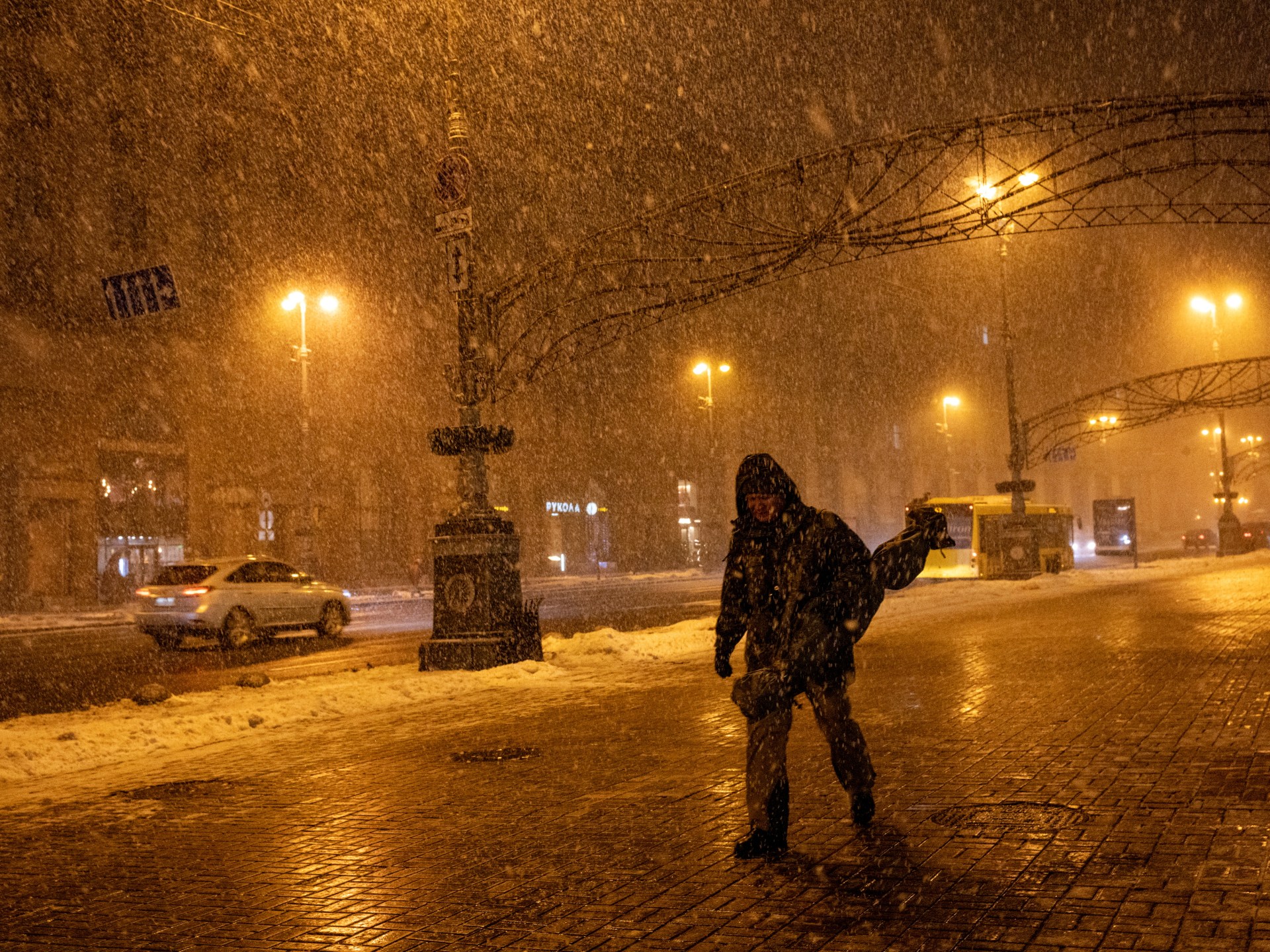

As winter approaches, there is concern in Ukraine.
Last month, Ukraine’s so-called Coalition of the Willing, a group of allies led by France and the United Kingdom, agreed to pool significant resources to help Kiev maintain electricity and central heating supplies to large urban areas. The effort seems to have had some effect as the summer season started a bit later than usual on October 28.
Yet it offers little reassurance that Ukrainian homes will be warm in the coming months. The Russian military continues to attack the country’s critical infrastructure, aiming to cripple its power grid and gas supplies as the cold weather continues.
“General Winter”, a staunch ally of Russia against Napoleon and Hitler, is also serving in this war – not only against Ukraine, but also against Europe.
After failing to win on the battlefield or coerce Kiev through ultimatums, Russian President Vladimir Putin has turned the war on Ukraine’s energy and logistics systems. At first glance, it looks like a replay of last winter, but the strategy has evolved.
In 2022 and 2023, Russia tried to force the Ukrainians to surrender. He failed. The spirit of the nation survived and the lights returned. Now Putin’s calculation is different. This time, the goal is not only to punish Ukraine, but also to destabilize Europe due to the human consequences of cold and darkness.
When Russia launched a full-scale invasion in late February 2022, millions of Ukrainians fled west by train, car and foot, creating the largest wave of refugees since World War II. If the energy system collapses, that surge can return with devastating force. This is the Kremlin’s most infamous design: arming for the winter.
Despite all the solidarity with Ukraine in the West, another wave of refugees would be extremely destabilizing. As the aid budget shrinks, Europe will face not only a financial burden but also a moral test. Desperate citizens fleeing the cold face closing borders and growing public discontent at home.
Today, there are about five million Ukrainian refugees in Europe. Germany and Poland have the largest populations at 1.2 million and 900,000 respectively. Both are very welcoming of Ukrainian refugees, but war weariness is fading and public attitudes are changing.
Nearly 100,000 Ukrainian men have crossed into Poland since Kiev loosened border exit rules for young men earlier this year, with many going to Germany. This created dissatisfaction among the people. An October survey found that 62 percent of Germans are in the party About sending back Ukrainian men of military age, and 66 percent of Ukrainians do not want the benefits. Maintaining social support for Ukrainian refugees cost Berlin 6 billion euros ($6.9bn) last year, and the new conservative German government is talking about tightening the budget.
In Poland, there was also public anger over the coming wave of young Ukrainian men fleeing the country. A survey conducted late last year found that 25 percent of Poles viewed Ukrainian refugees positively, 30 percent negatively and 41 percent neutrally. Fifty percent believe that government support is too much for them. A year later, this negative trend is likely to continue.
In other countries, where Ukrainian refugee populations are small, negative attitudes are also on the rise. In the Czech Republic, where an estimated 380,000 Ukrainians have settled, 60 percent of citizens now believe the country has accepted more refugees than it can manage.
In June, the European Commission temporarily extended protection for Ukrainians until March 2027, but concerns about a second wave of refugees are palpable across the bloc. Over the past two years, European Union countries have tightened policies on asylum seekers as a whole. Germany has reintroduced border controls with neighboring Schengen countries, extending them until 2026. Poland has stopped allowing asylum applications at the border with Belarus.
Putin and his ally Belarusian President Alexander Lukashenko know the strategy of pushing desperate people to the EU’s borders. Belarus experimented with this type of hybrid warfare in 2021 when it turned asylum seekers from the Middle East and Asia towards the Polish border.
At that time, there were thousands of people on that border, resulting in a humanitarian crisis and death. This winter, if Ukraine’s energy sector collapses, hundreds of thousands of people will flee west to Poland or south to Romania and Hungary. Infiltration of provocateurs or drone activities along the border can easily worsen the situation.
Will Europe be ready?
Last month, Poland’s foreign minister, Radoslaw Sikorski, said his country would help with generators and additional electricity supplies for Ukraine. But how can generators keep the more than 30 million Ukrainians stuck at home warm during the freezing winter?
Putin knows the answer to this question. This is why the Russian military continues to bomb power plants, gas storages and railway junctions: not only to destroy infrastructure, but also to push civilians westward. Terror has become a weapon.
This winter, Ukraine may very well discover the limits of its “willing” allies’ solidarity.
The views expressed in this article are the author’s own and do not reflect Al Jazeera’s editorial policy.